G2

Seller Solutions (WIP)

Spring 2025 - Winter 2026

Principal Propuct Designer

G2

Seller Solutions (WIP)

Winter - Spring 2019

Principal Propuct Designer

G2

Seller Solutions (WIP)

Spring 2025 - Winter 2026

Principal Propuct Designer

Overview

Overview

Overview

Objective

The project began with a broad business mandate: revitalize G2 Suites.

Suites was G2's multiproduct offering, but adoption and retention weren't meeting expectations. Research revealed a consistent pattern: buyers didn't understand what Suites were, sellers struggled to communicate their value, and customers often failed to see how the products fit together to solve a meaningful problem.

The goal was to transform Suites into a viable growth business and generate $1M in associated revenue by Q1 2026.

Through customer research, stakeholder interviews, and analysis of existing performance data, we uncovered a critical insight. The issue wasn't pricing, packaging, or feature parity. Buyers weren't looking for collections of products. They were looking for solutions to business challenges.

The problem wasn't pricing. It was storytelling.

Constraints / Challenges
  • Existing "Suite" pages were little more than collections of product listings, with no cohesive narrative connecting them.

  • Buyers thought in terms of business outcomes and solutions, while G2 presented products as isolated offerings.

  • Sellers lacked a compelling way to communicate how multiple products worked together to solve a larger problem.

  • The experience failed to reinforce G2's unique value proposition or help vendors succeed within the G2 ecosystem.

  • Existing customer investment in Suites limited how aggressively we could reinvent the model.

  • The initiative required alignment across Product, Sales, Marketing, Customer Success, and Executive Leadership.

  • Success depended not only on improving user experience, but on creating a monetizable business model that could reduce churn and drive new revenue.

Pre-work: New Systems & Vision

Pre-work: New Systems & Vision

Pre-work: New Systems & Vision

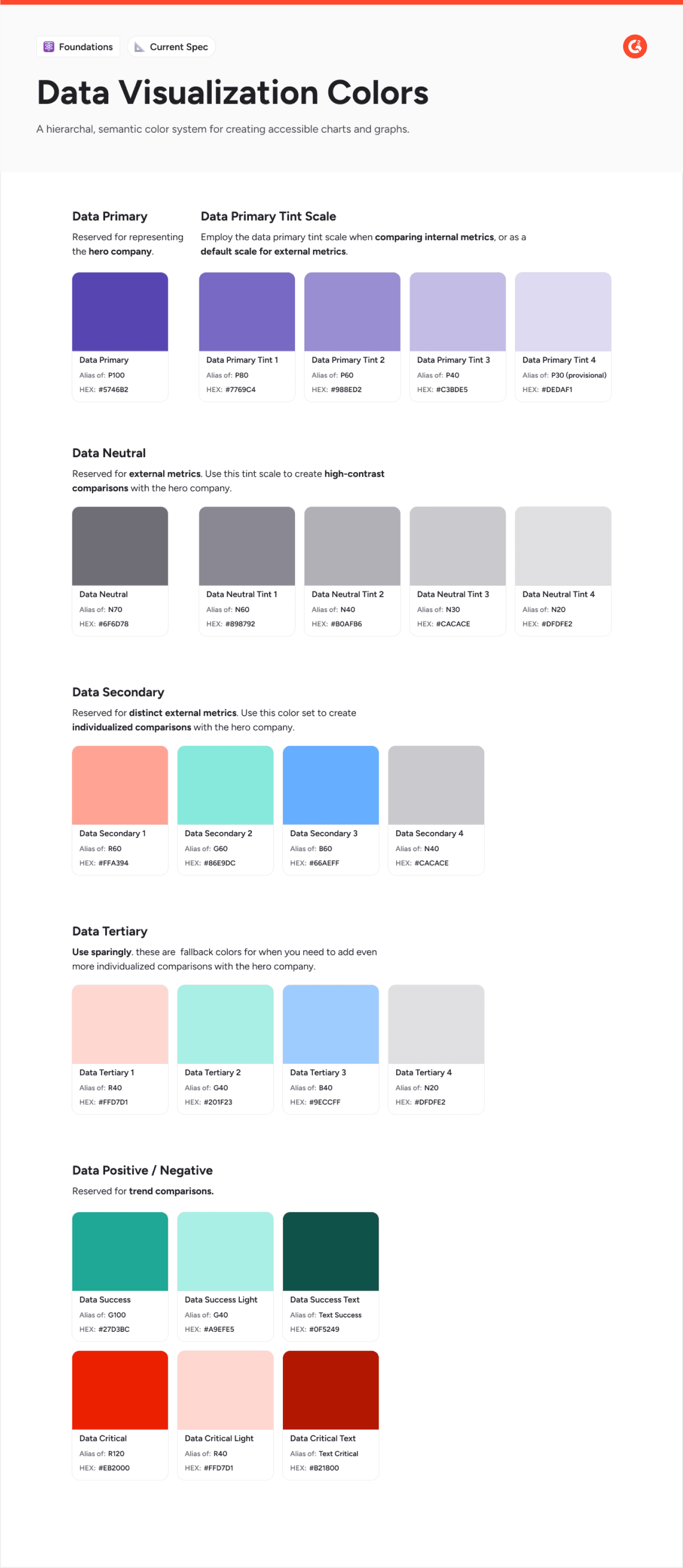
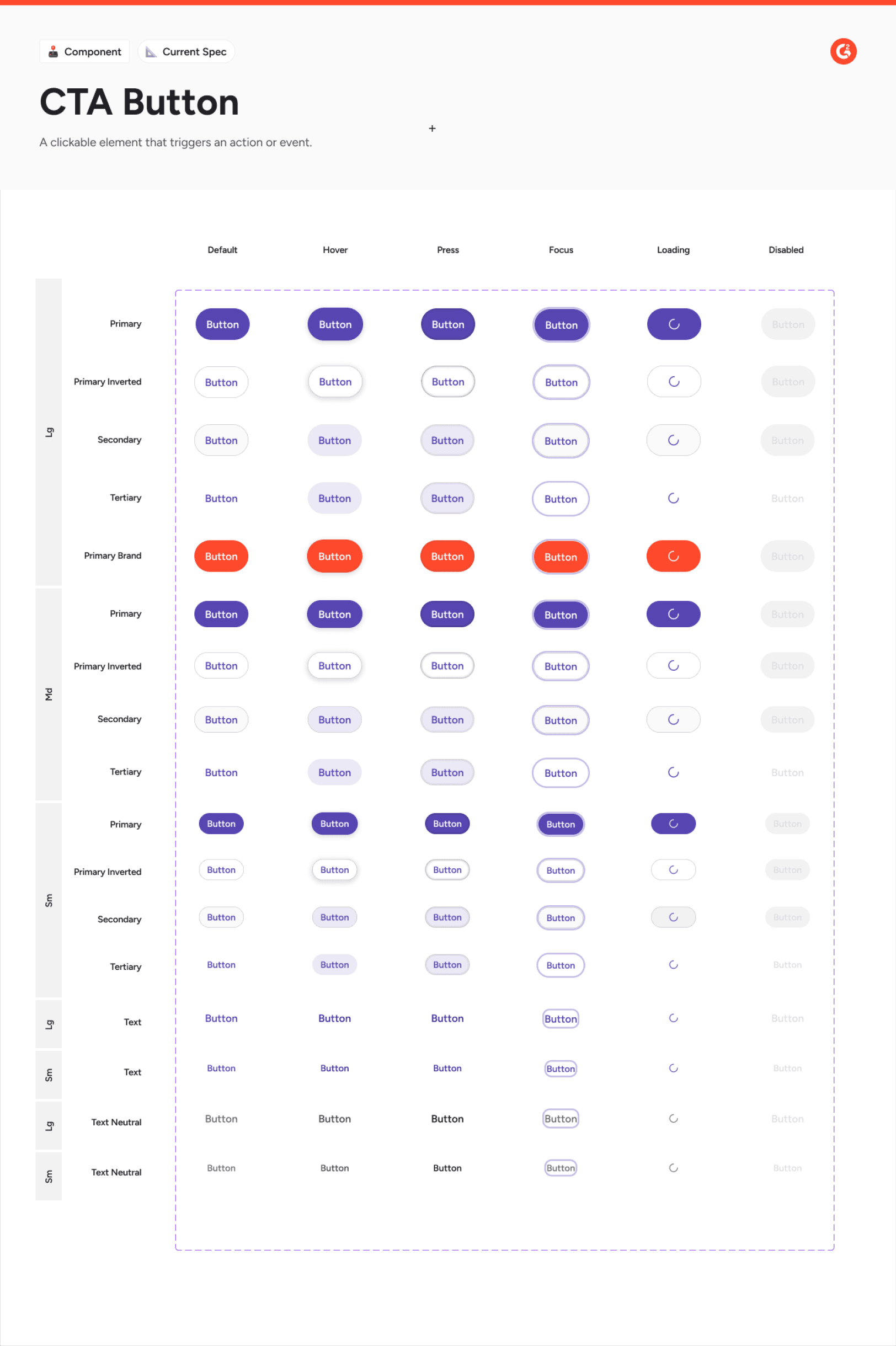
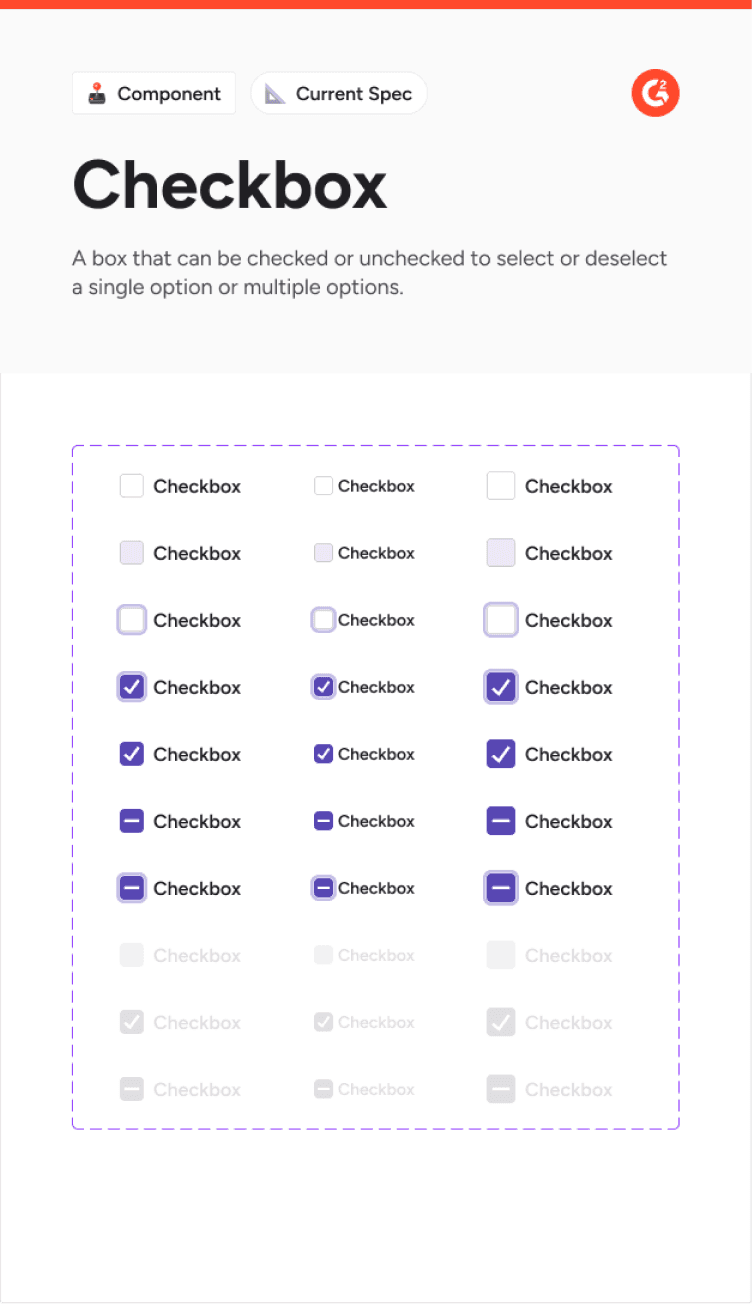
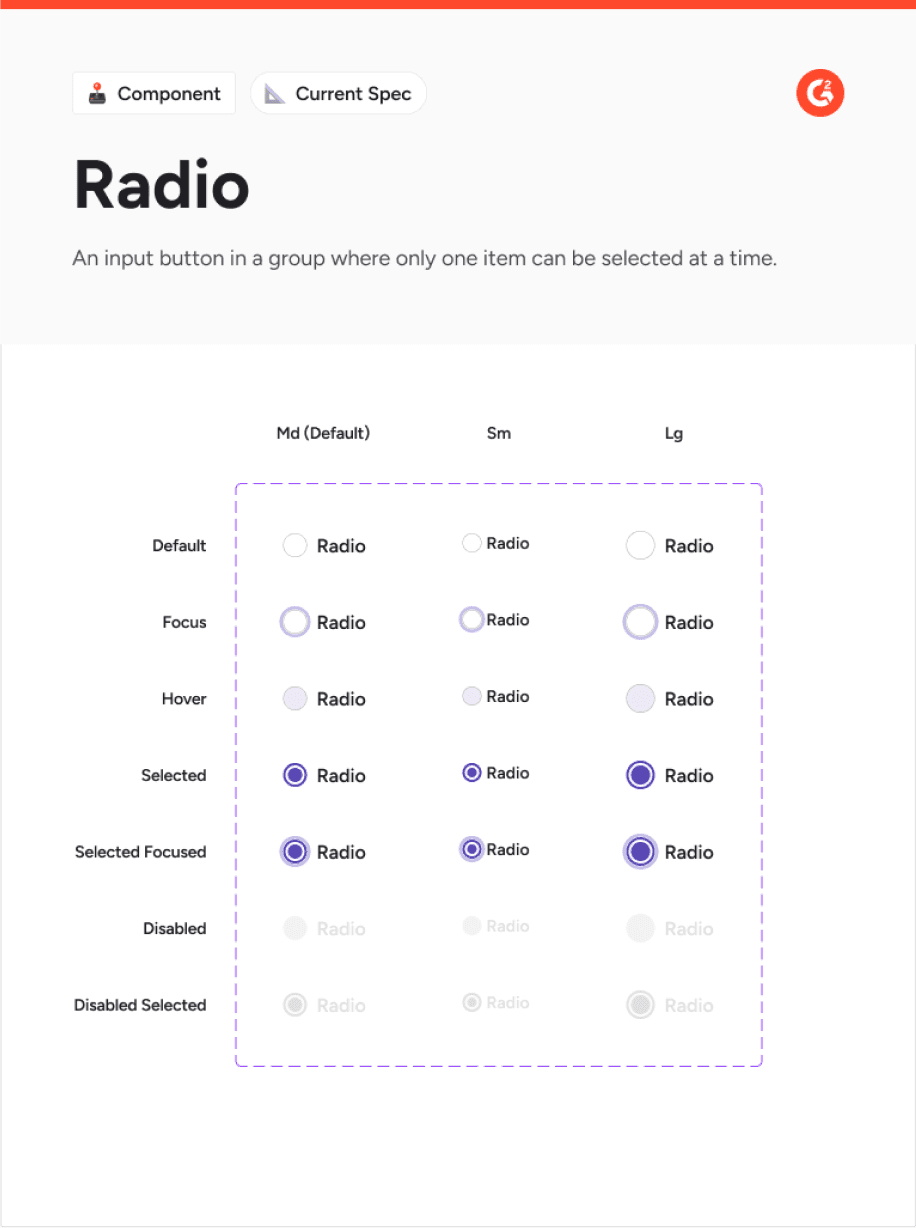
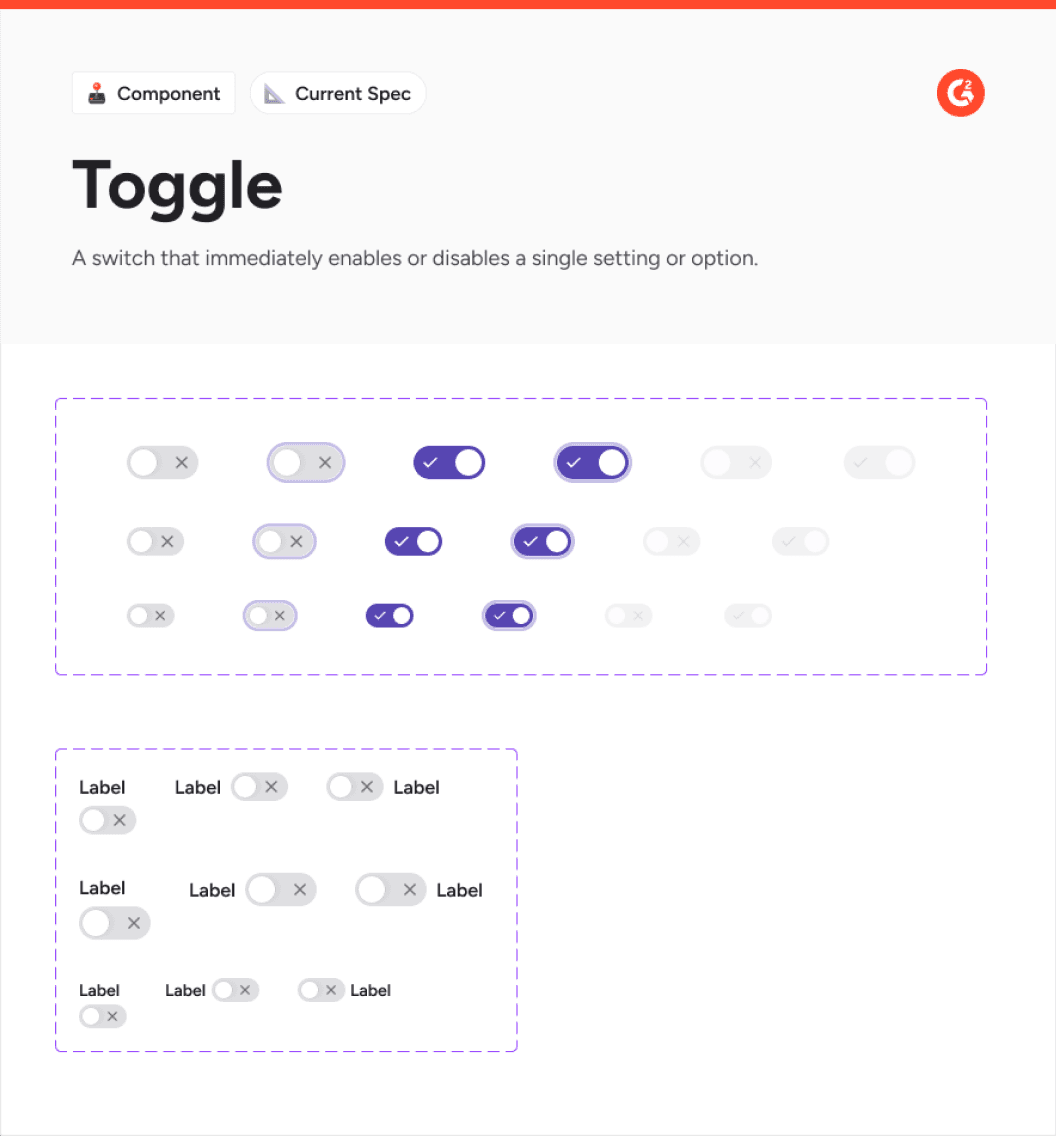
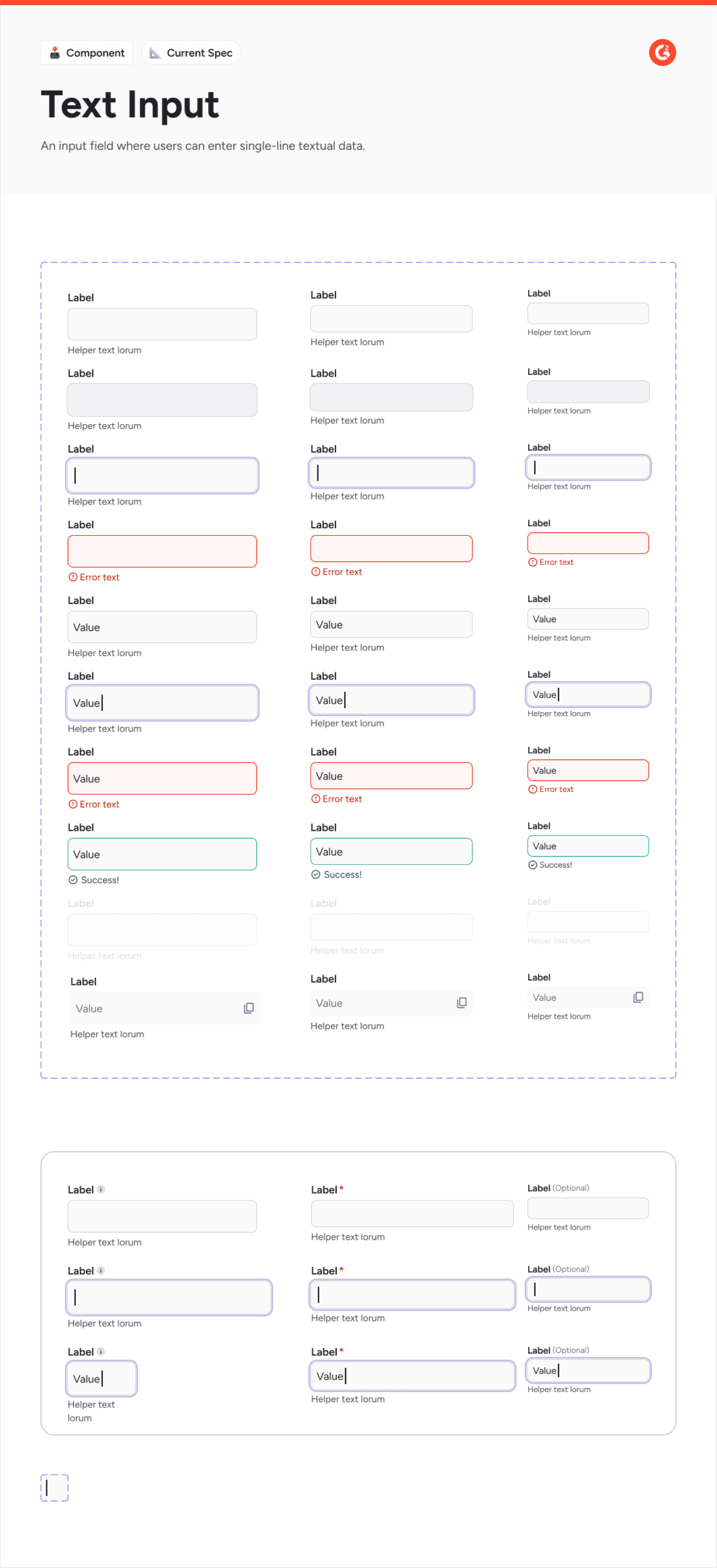
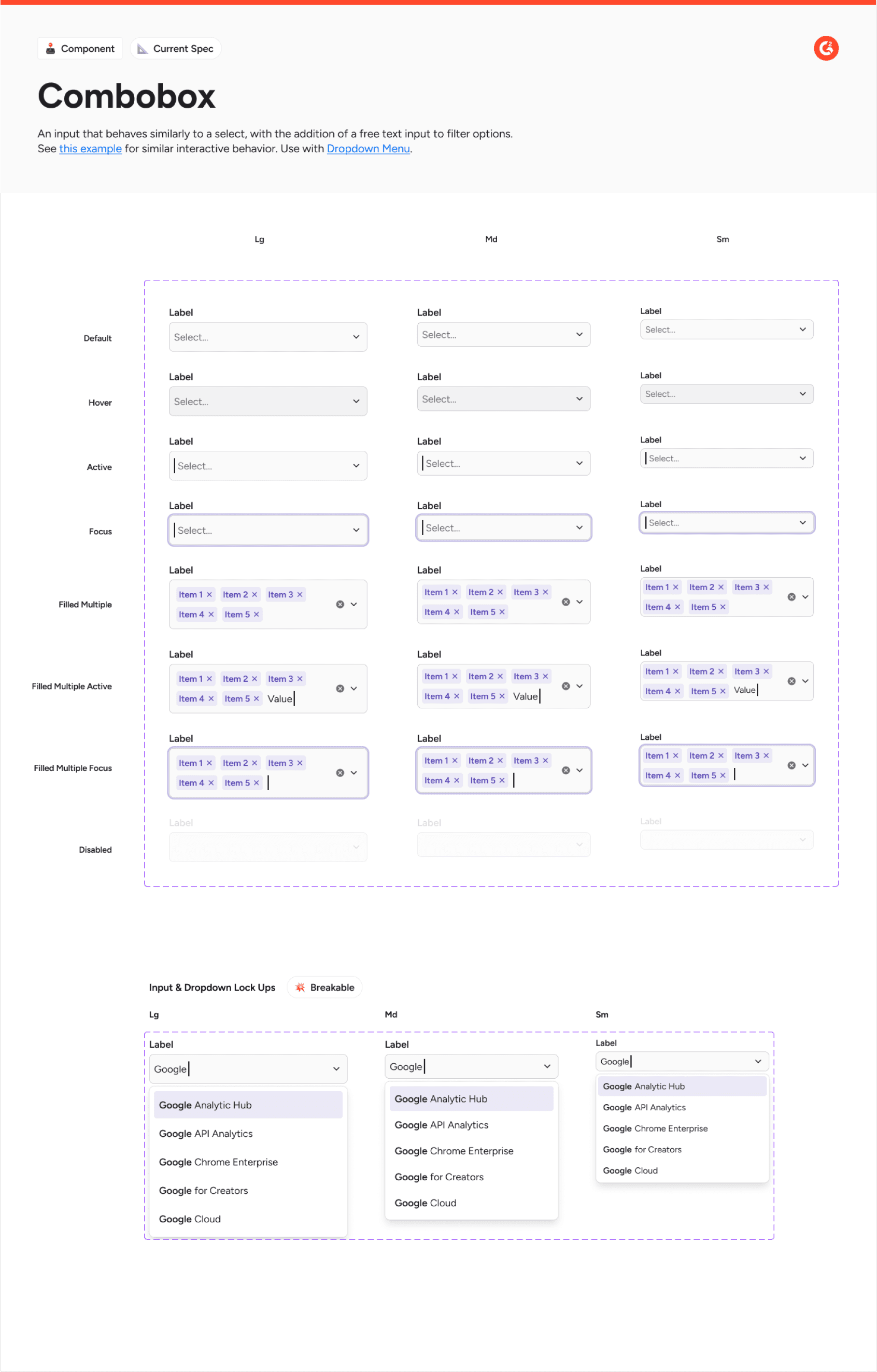
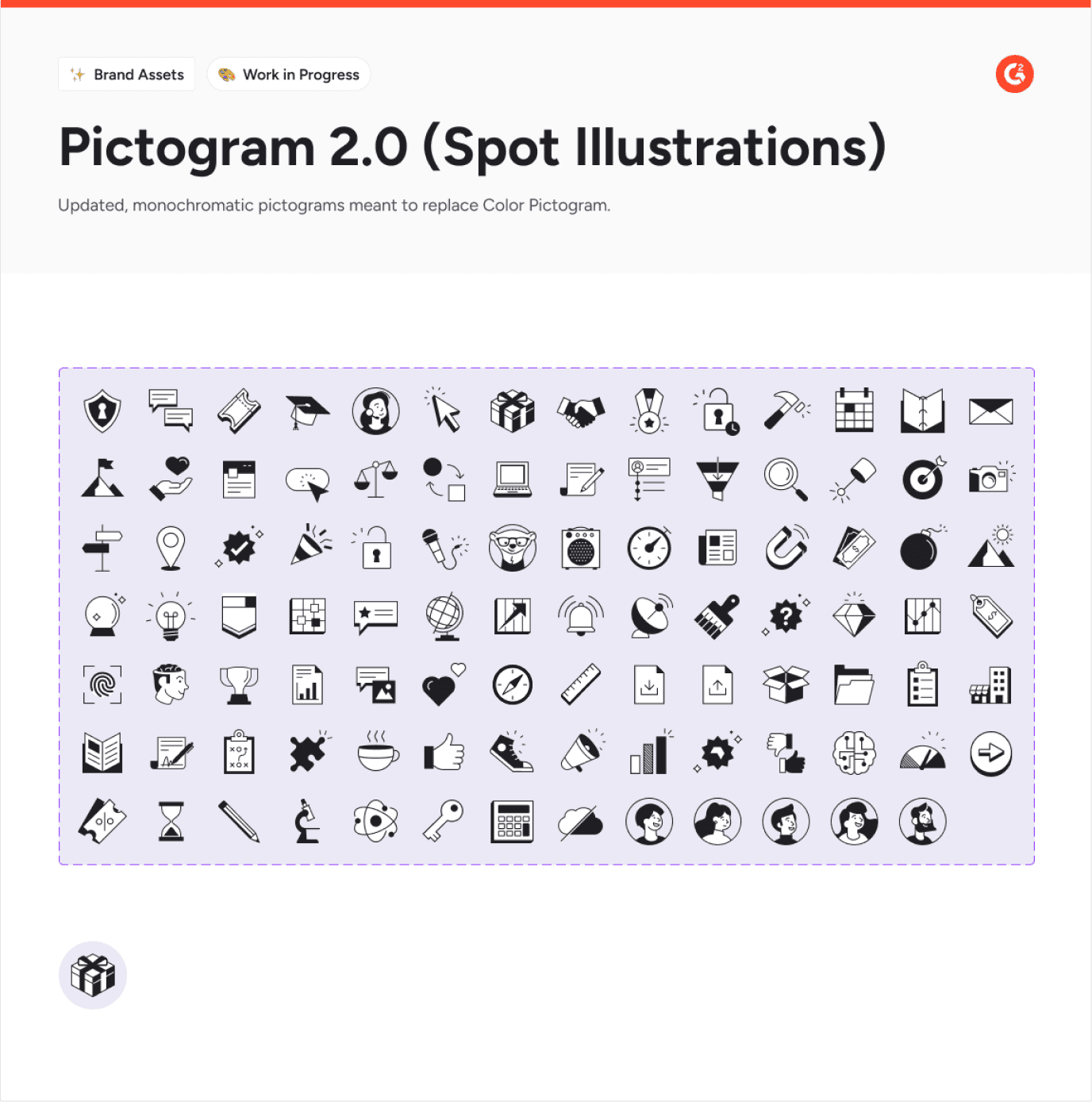
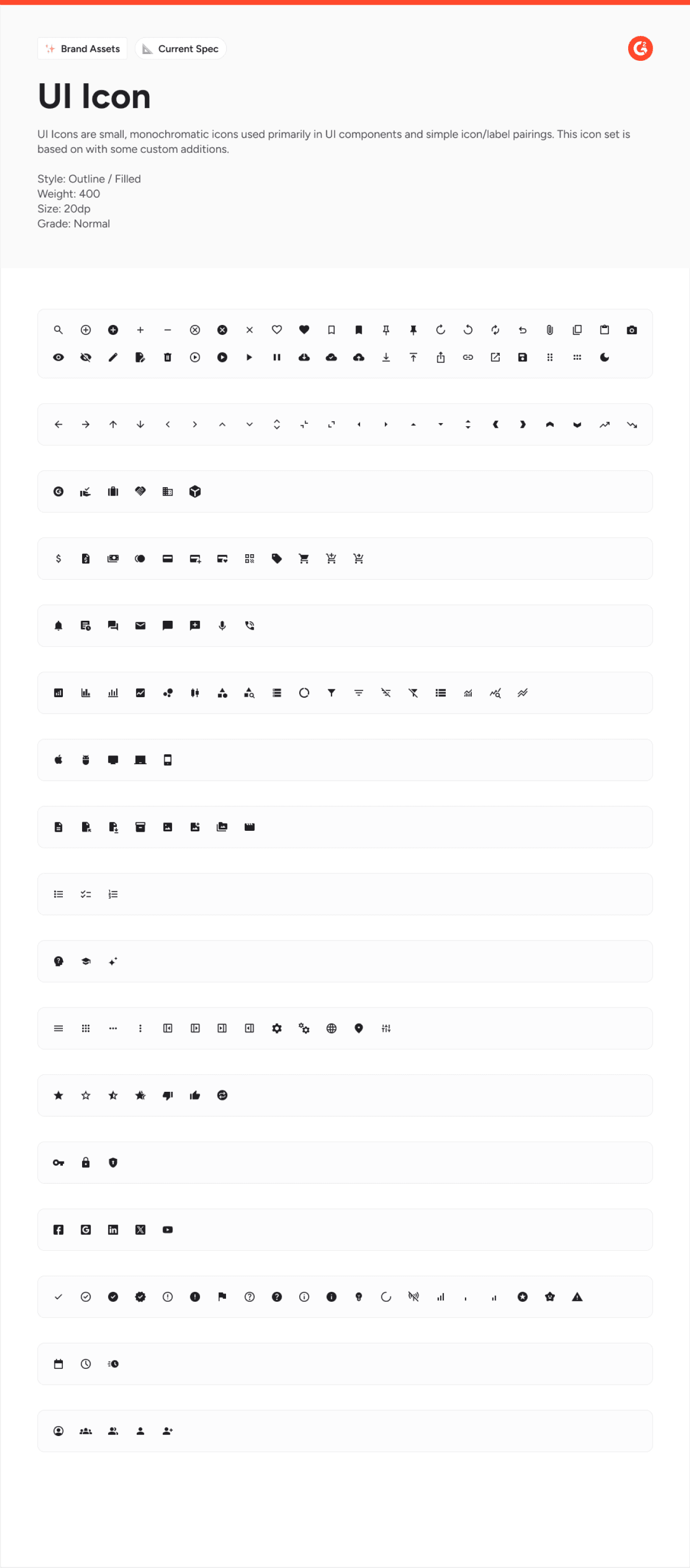
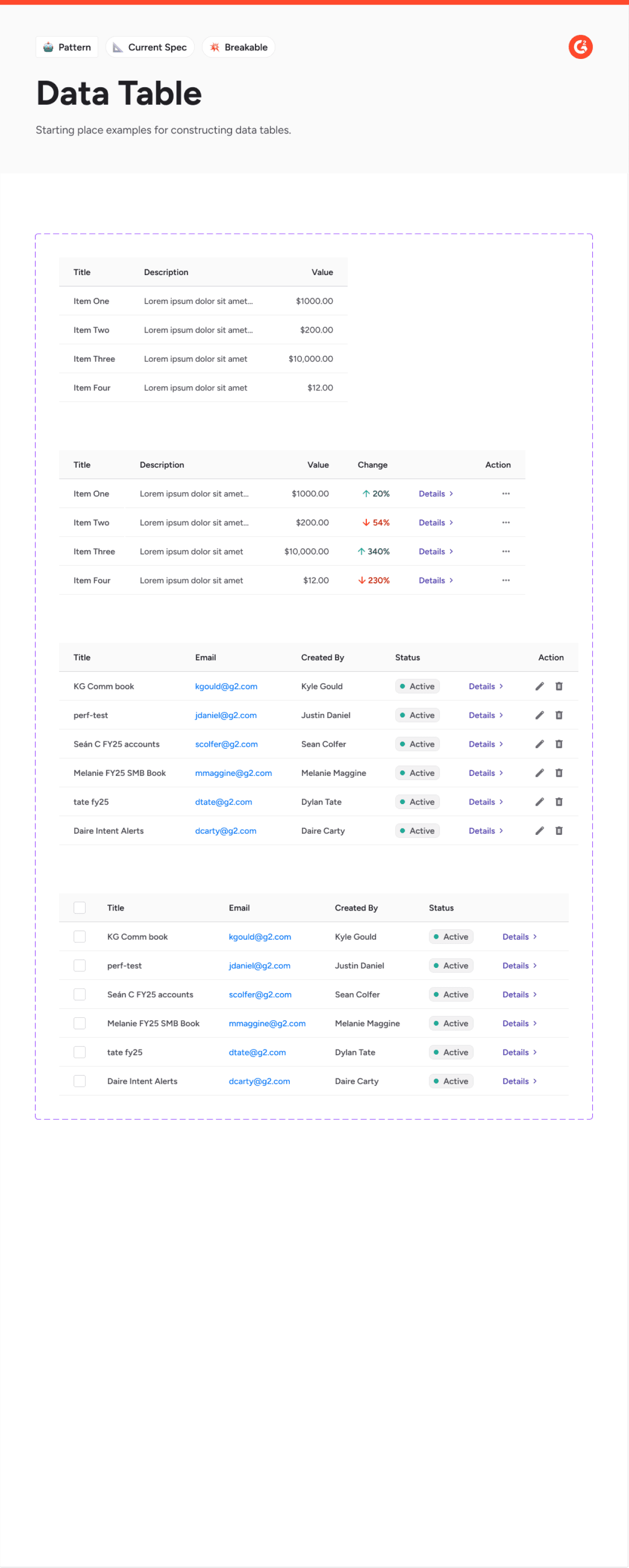
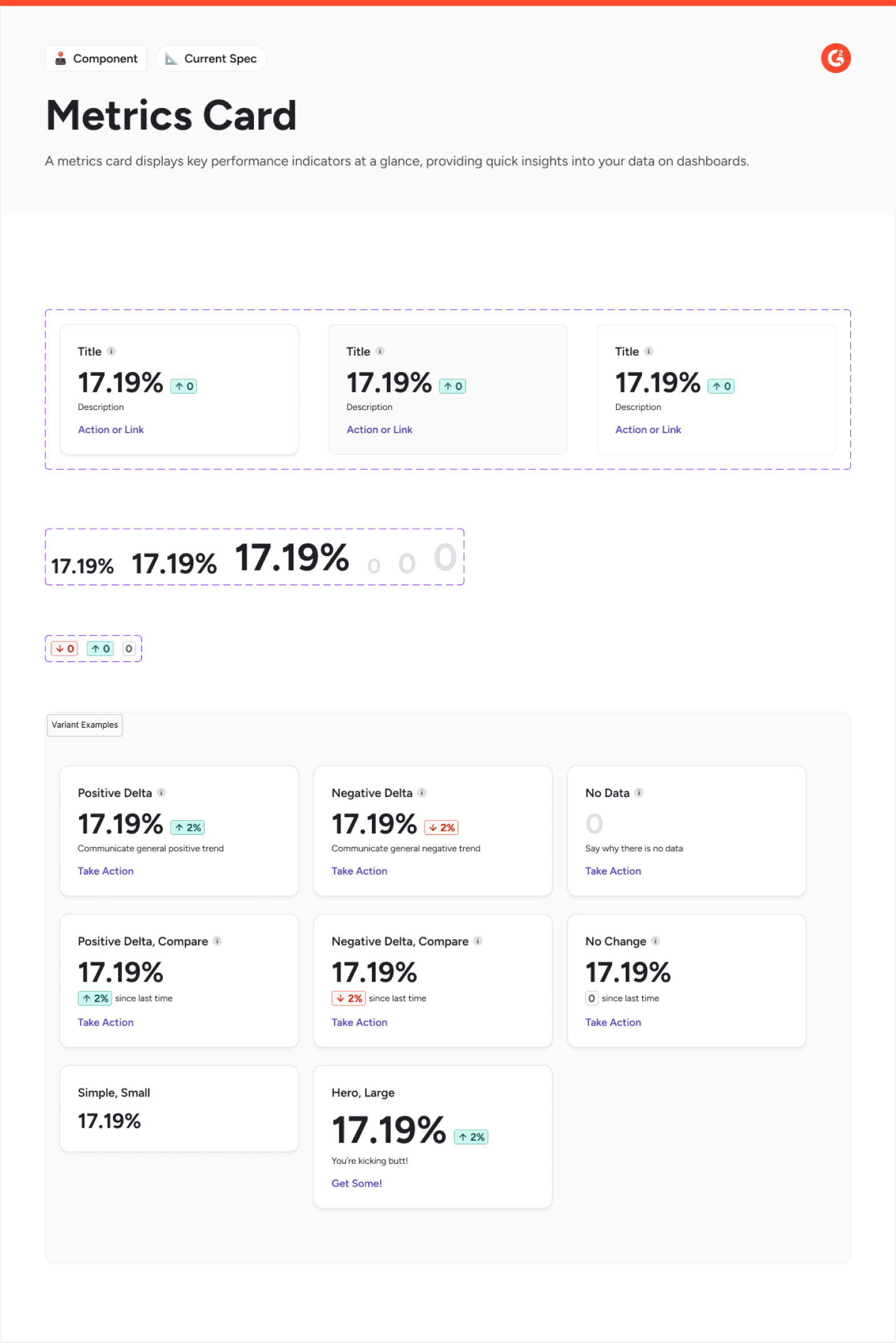
The Elevate Design System

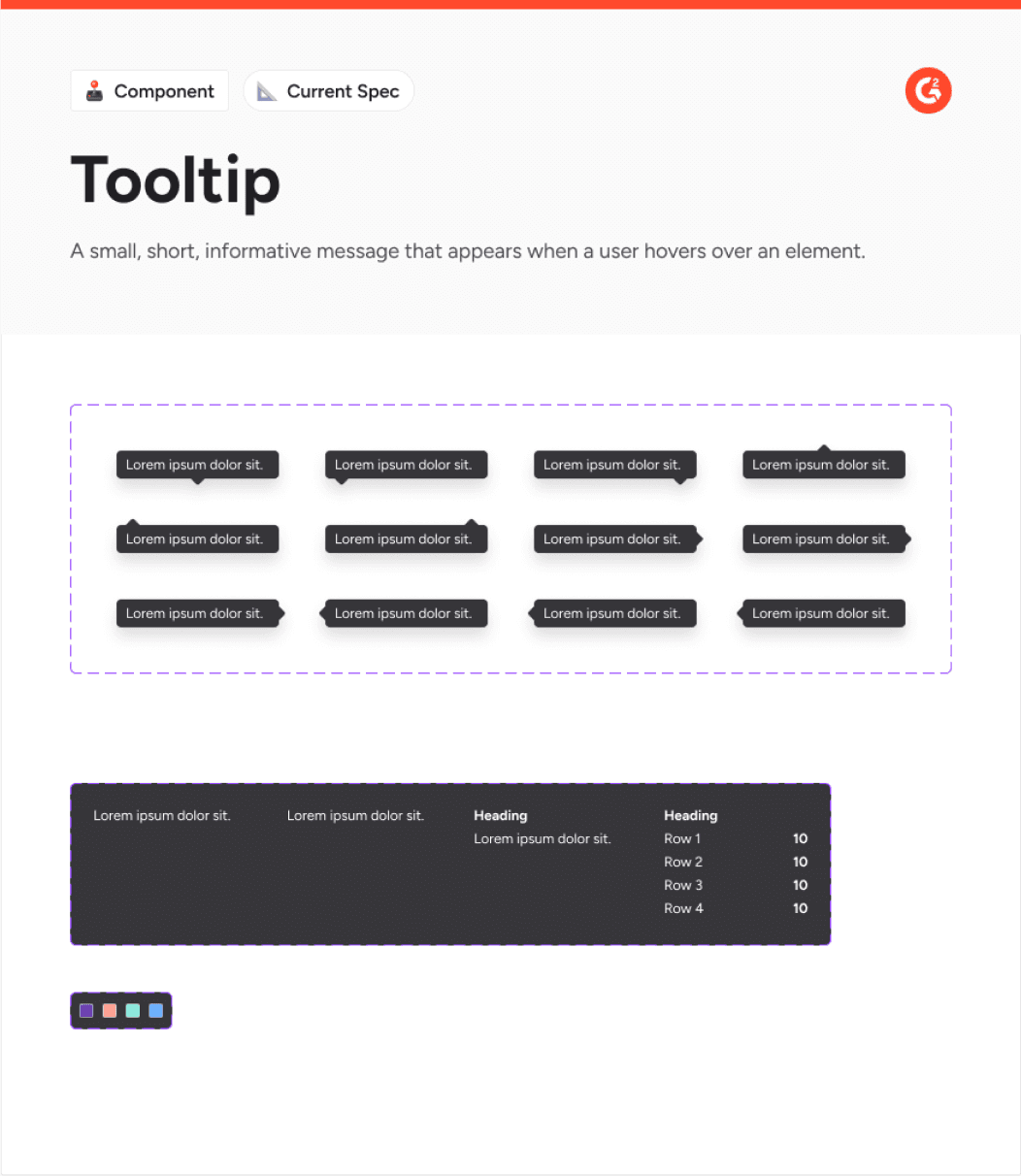
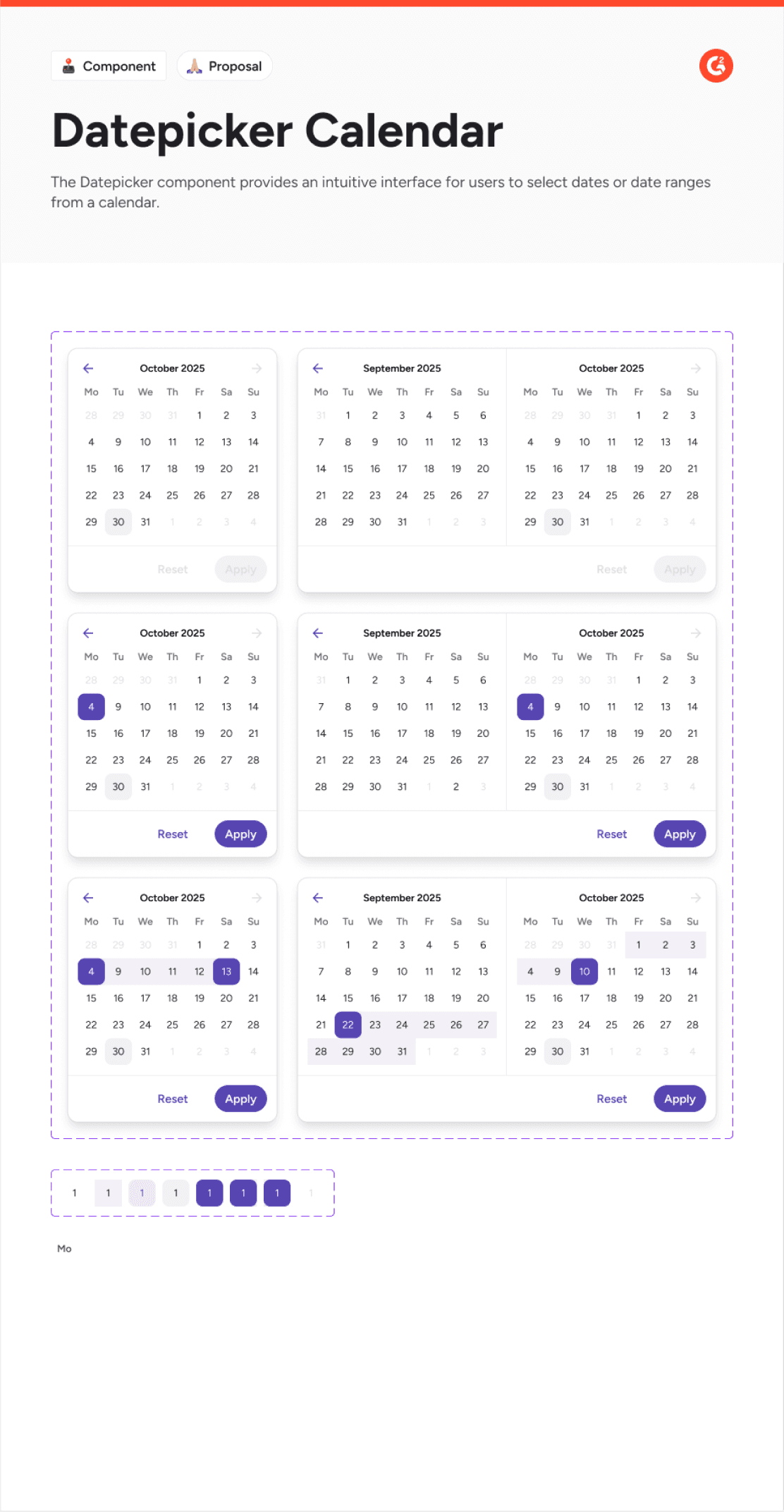
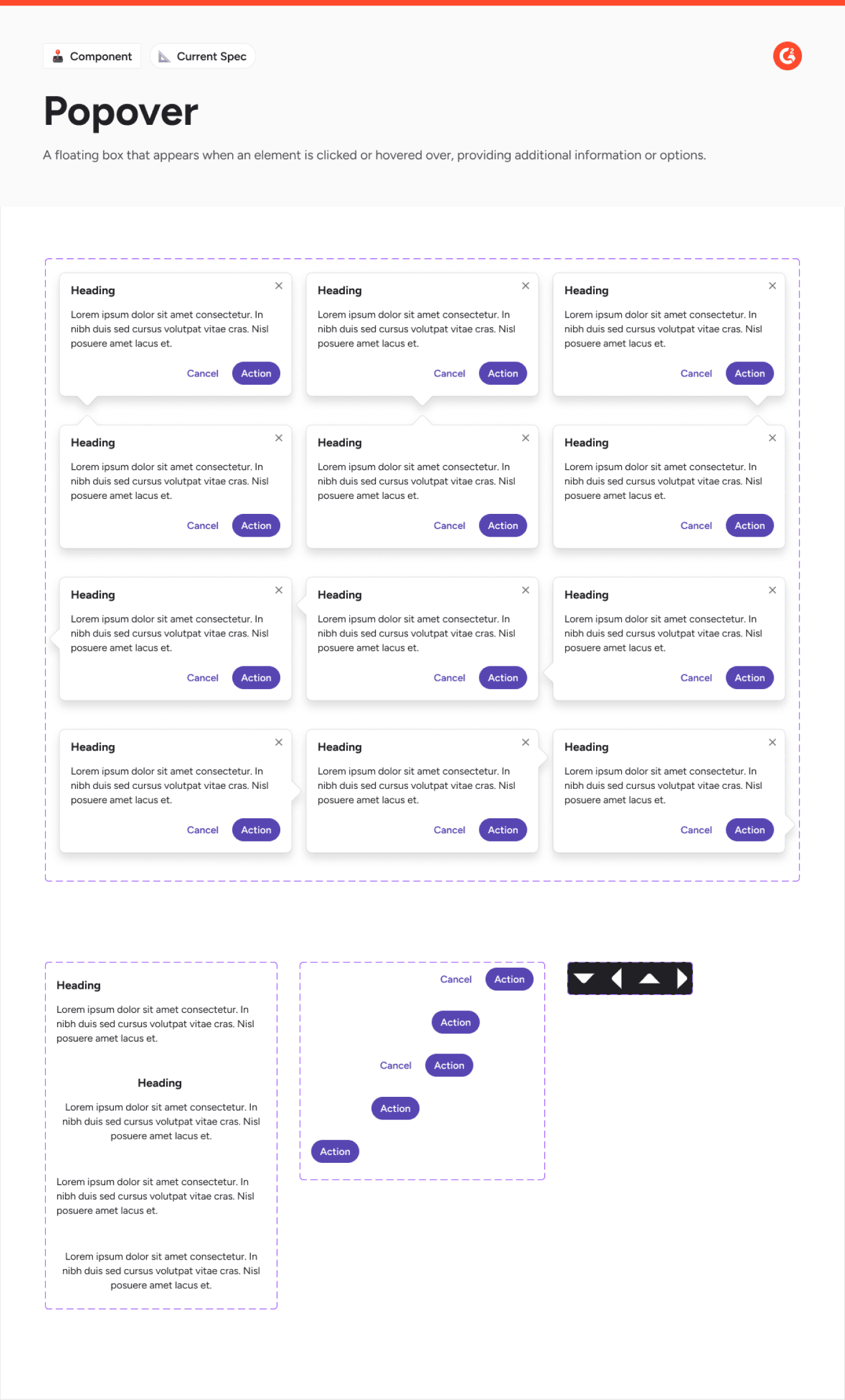
One of my first major initiatives at G2 was helping lead the evolution of our Elevate Design System. The effort touched nearly every corner of the product organization and required close partnership between Design and Engineering to establish a more scalable foundation for the platform.

Together, we introduced semantic design tokens, modernized core components, improved accessibility, and created a healthier workflow between designers and developers. More importantly, we shifted the system from a component library to a true product foundation that could support future growth.

The impact extended far beyond the design system itself. Elevate became the backbone for many of our most important initiatives, enabling patterns like inline editing, modular page construction, and more consistent experiences across G2's expanding product ecosystem.

The example below barely scratches the surface:
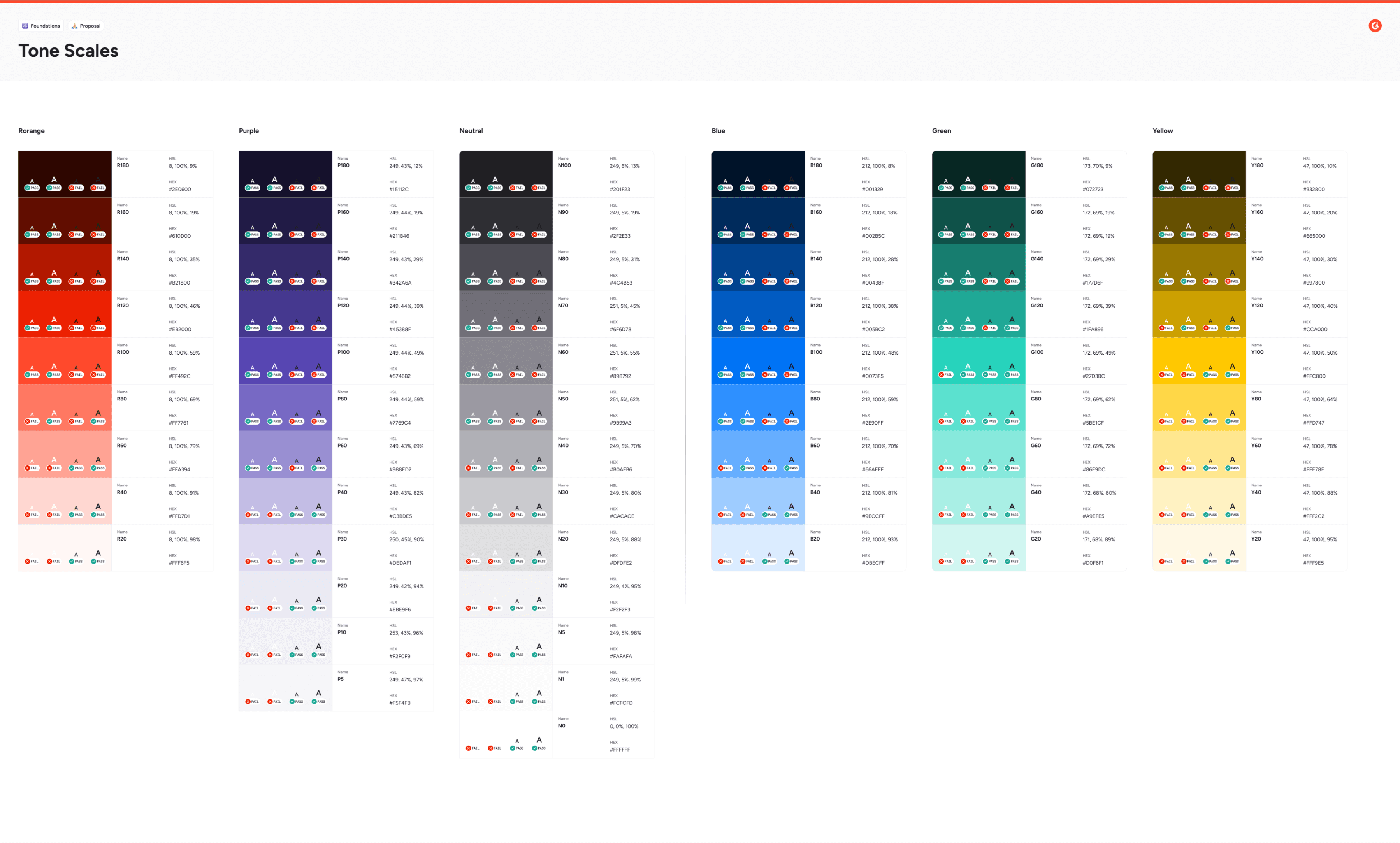
In many ways, Elevate deserves its own case study. It was a substantial undertaking and one of the most transformative projects I worked on at G2. At the same time, the rise of AI-assisted design and development has changed the landscape dramatically. If I were leading a similar effort today, I would approach many aspects differently, placing far greater emphasis on automation, code generation, and systems that can evolve alongside AI-native workflows.

Visual Narative Work

Another foundational initiative was a body of exploratory work we called Visual Narrative.

The goal wasn't to design a specific feature, but to help the team think about the future of the interface: modularity, modernity, transparency, structure, and clarity of action. At a time when the platform had become increasingly fragmented, these explorations gave us a shared vision for where the experience could go.

More than visual concepts, the work became a conceptual spine for future product decisions. It directly influenced several initiatives, including the move toward inline, content-forward editing that would later become a cornerstone of the Solutions experience.

I would probably use the second version for a portfolio. It positions the work as strategic vision-setting, which is often more interesting for a Principal Designer case study than the artifacts themselves.

Research

Research

Research

Customer-Centered Discovery

Research was embedded throughout the project rather than treated as a separate phase. We partnered with trusted Seller customers, conducted recurring interview cycles, and held collaborative synthesis sessions to identify patterns and opportunities. These insights directly informed our design sprints, prototypes, and validation efforts, creating a continuous feedback loop that helped us reduce risk and build features grounded in real customer needs.
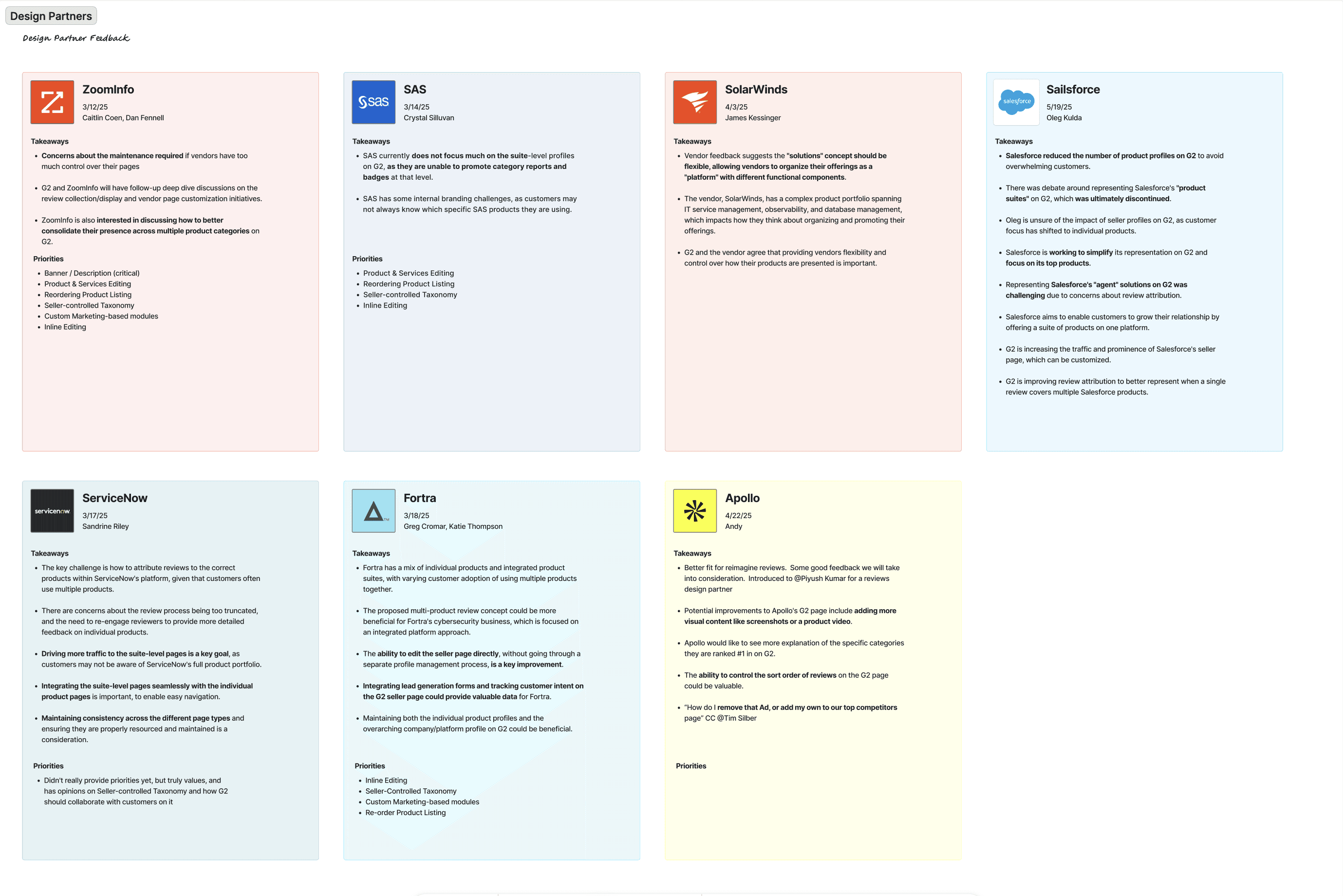
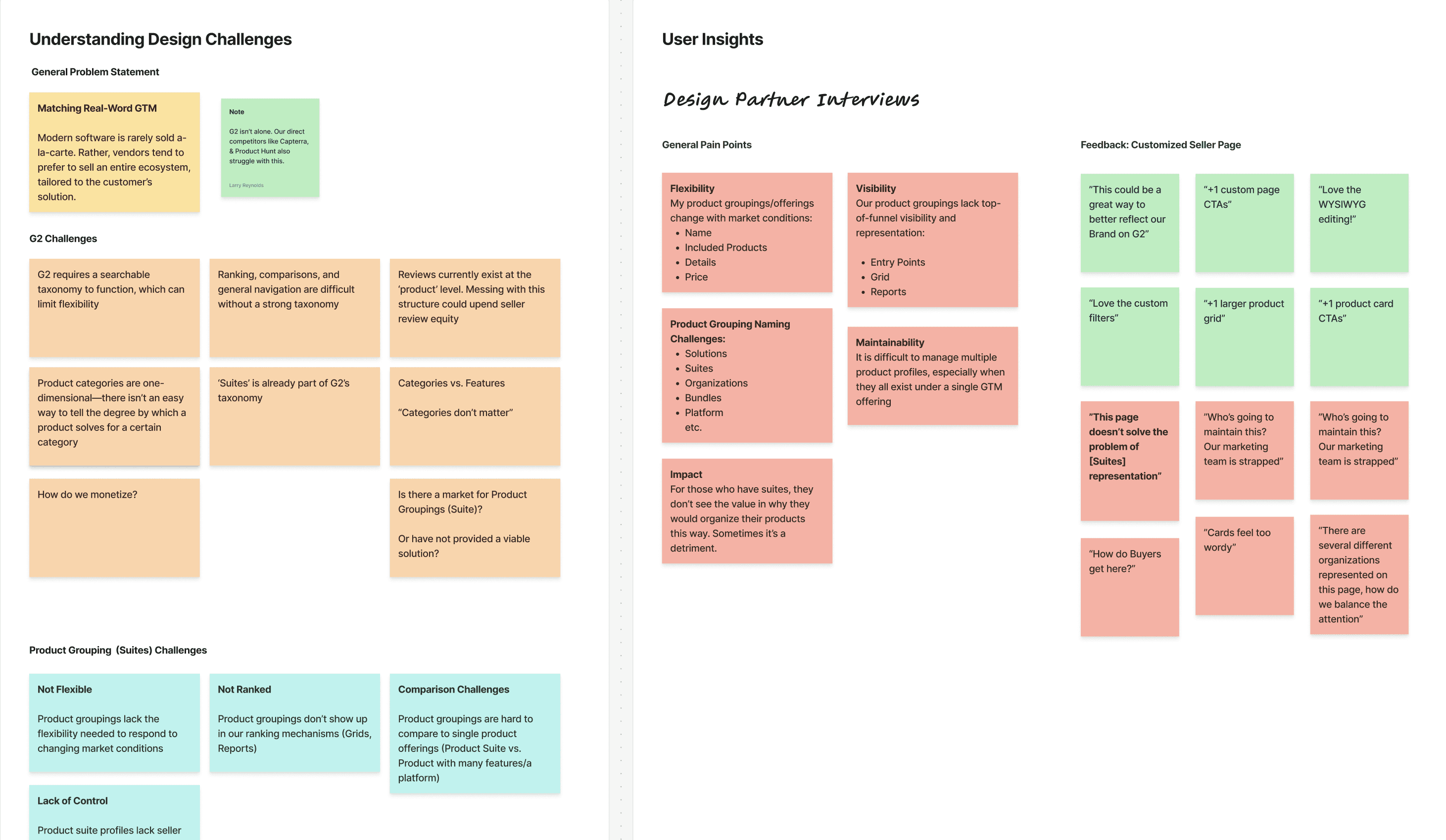
To ground our decisions in real customer needs, we partnered with a cohort of trusted Seller customers representing different stages of the purchase process. These design partners provided regular feedback and helped us test and refine new feature ideas before launch.

After each round of interviews, we held group synthesis sessions to review feedback and identify key themes. We encouraged everyone involved to contribute their observations, recognizing that different participants often notice different signals, concerns, and opportunities.

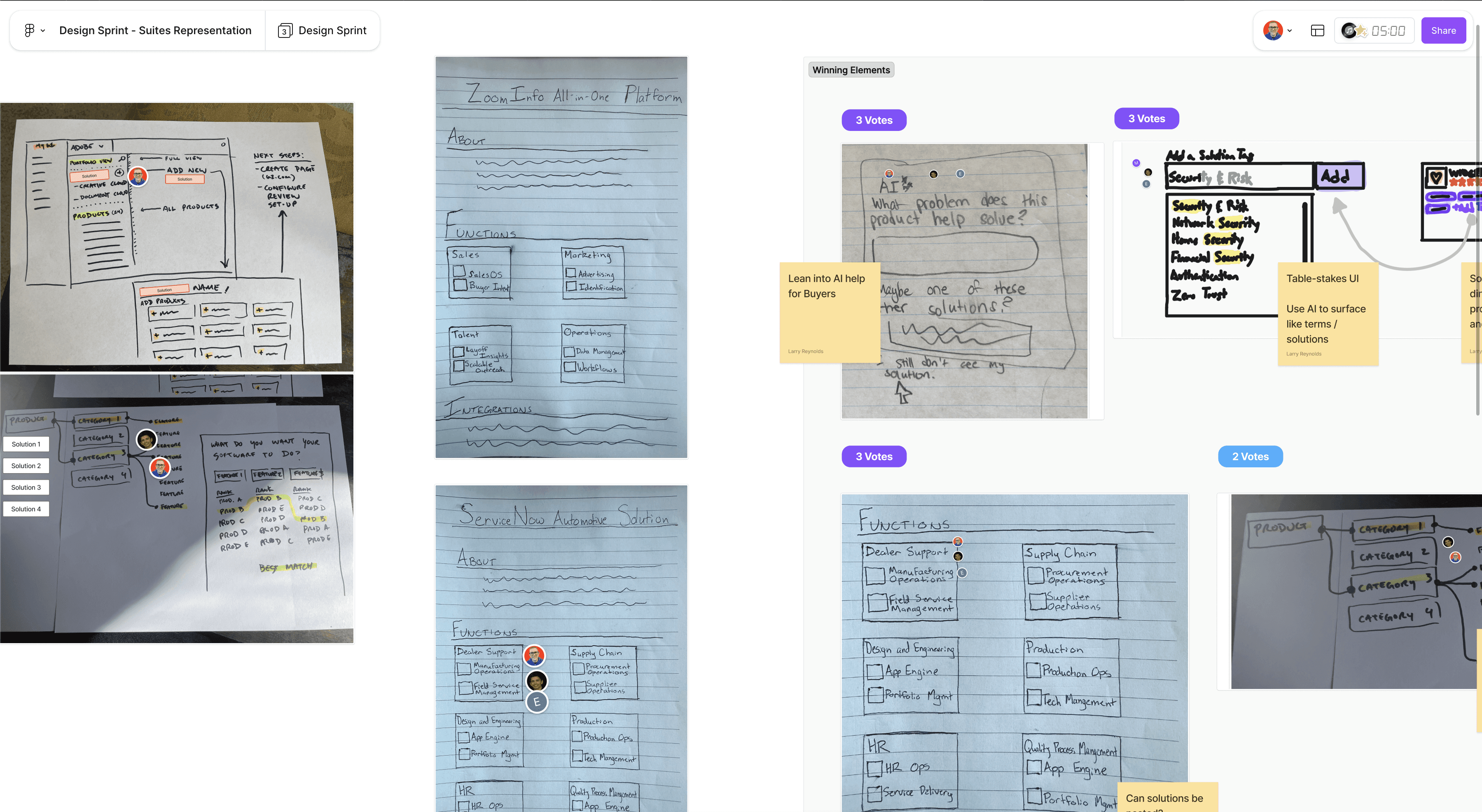
Each 4–6 week cycle began with a series of collaborative design sprint activities, including sketching, concept exploration, and rapid prototyping to generate, refine, and align on potential solutions.

We shared customized, interactive prototypes with each design partner, allowing them to explore proposed features in context and provide detailed feedback on the experience.

Initial Tests & Iterations

Initial Tests & Iterations

Initial Tests & Iterations

Our process centered on rapid testing, measurement, and iteration. Rather than attempting to deliver the full vision at once, we broke it into a series of focused innovation sprints, each designed to explore a specific customer problem or opportunity. Working closely with our design partners, we tested concepts, gathered feedback, and refined our direction with every cycle.

Stepping Stones

On-Page Editing for Seller Pages
One of our earliest explorations focused on making content management more intuitive by allowing customers to edit pages directly in context rather than navigating to separate management tools.

Featured Products
We tested new ways for sellers to highlight key products and services, giving them greater control over how they presented their offerings to prospective buyers.

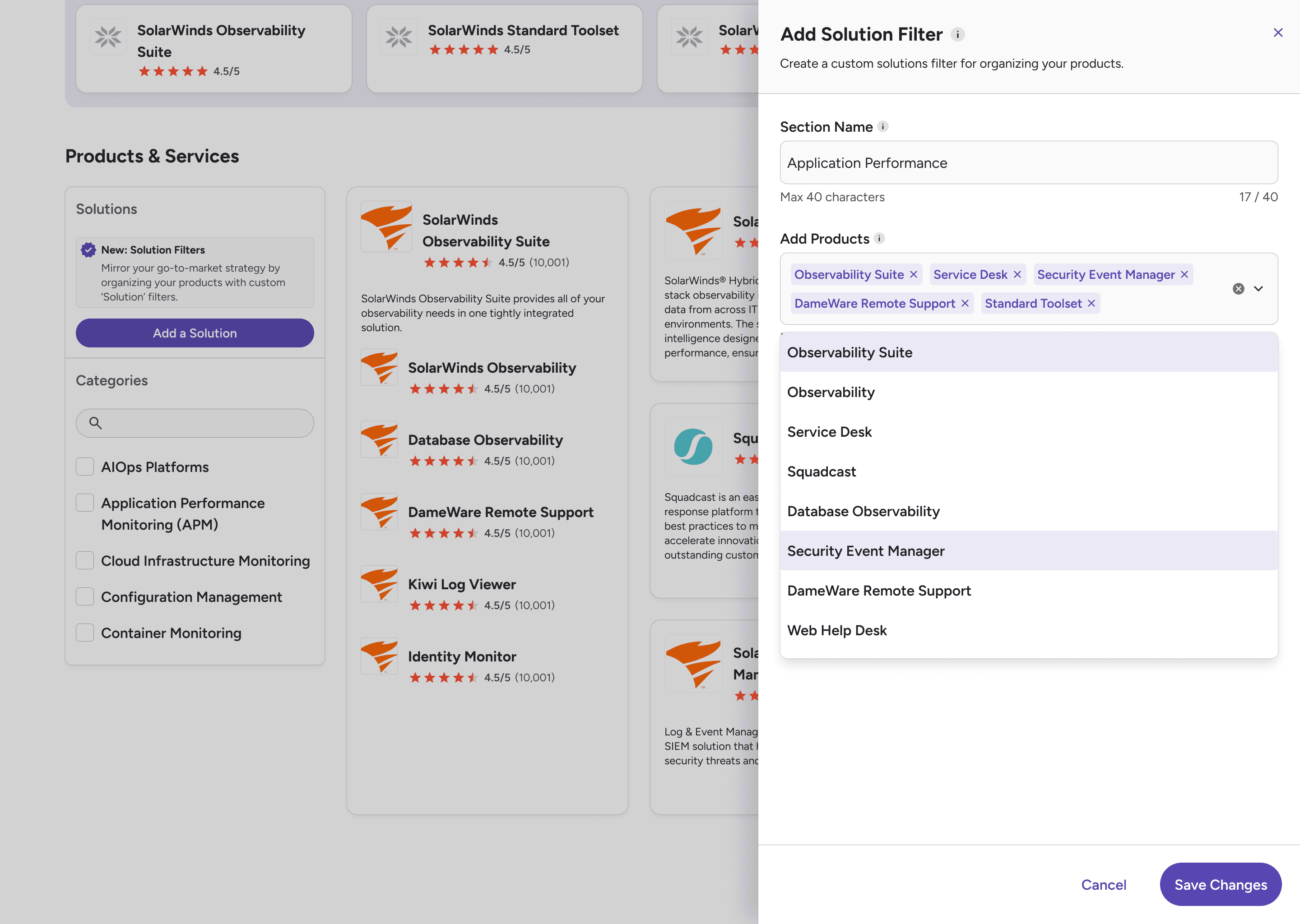
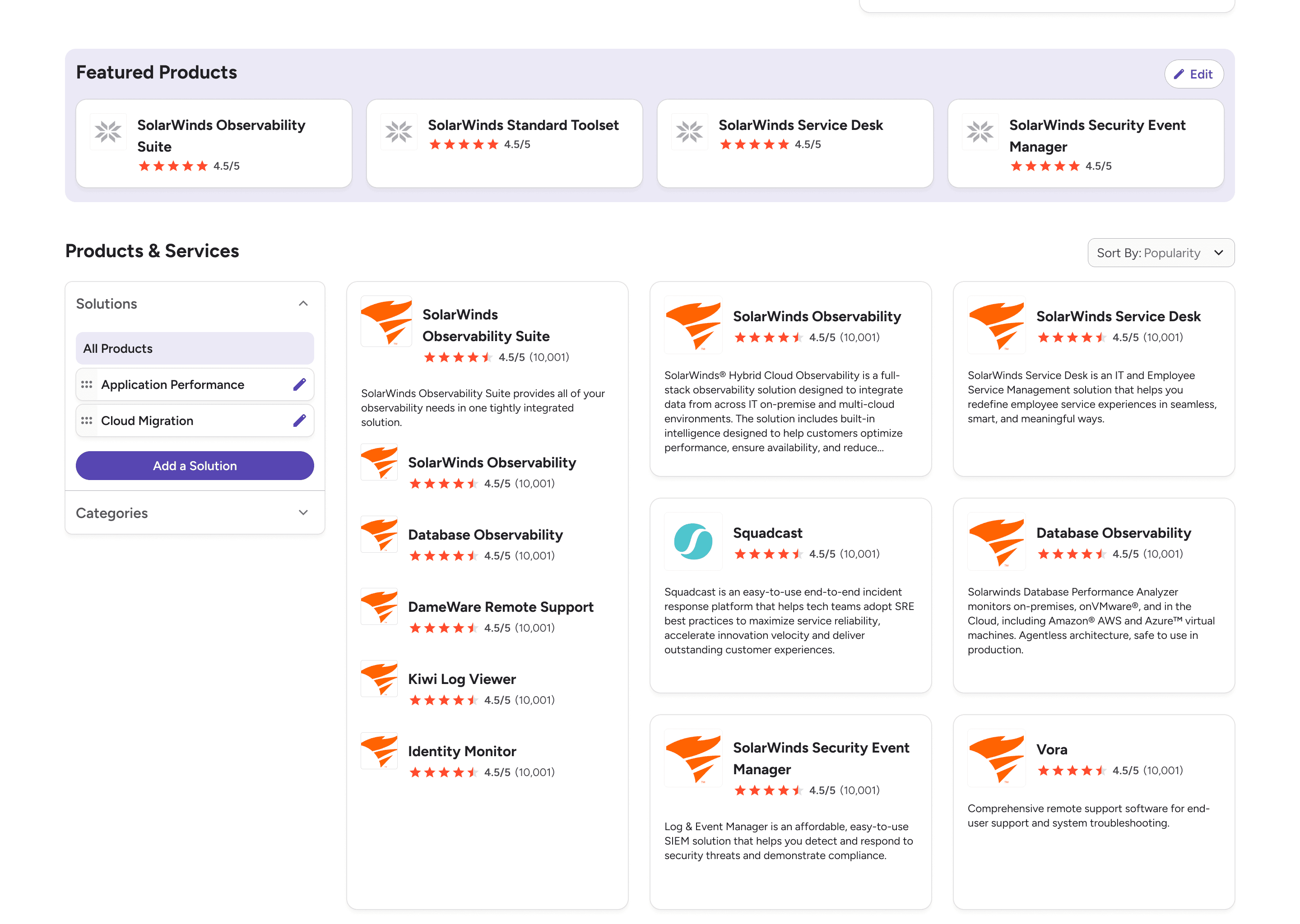
Solution Filters
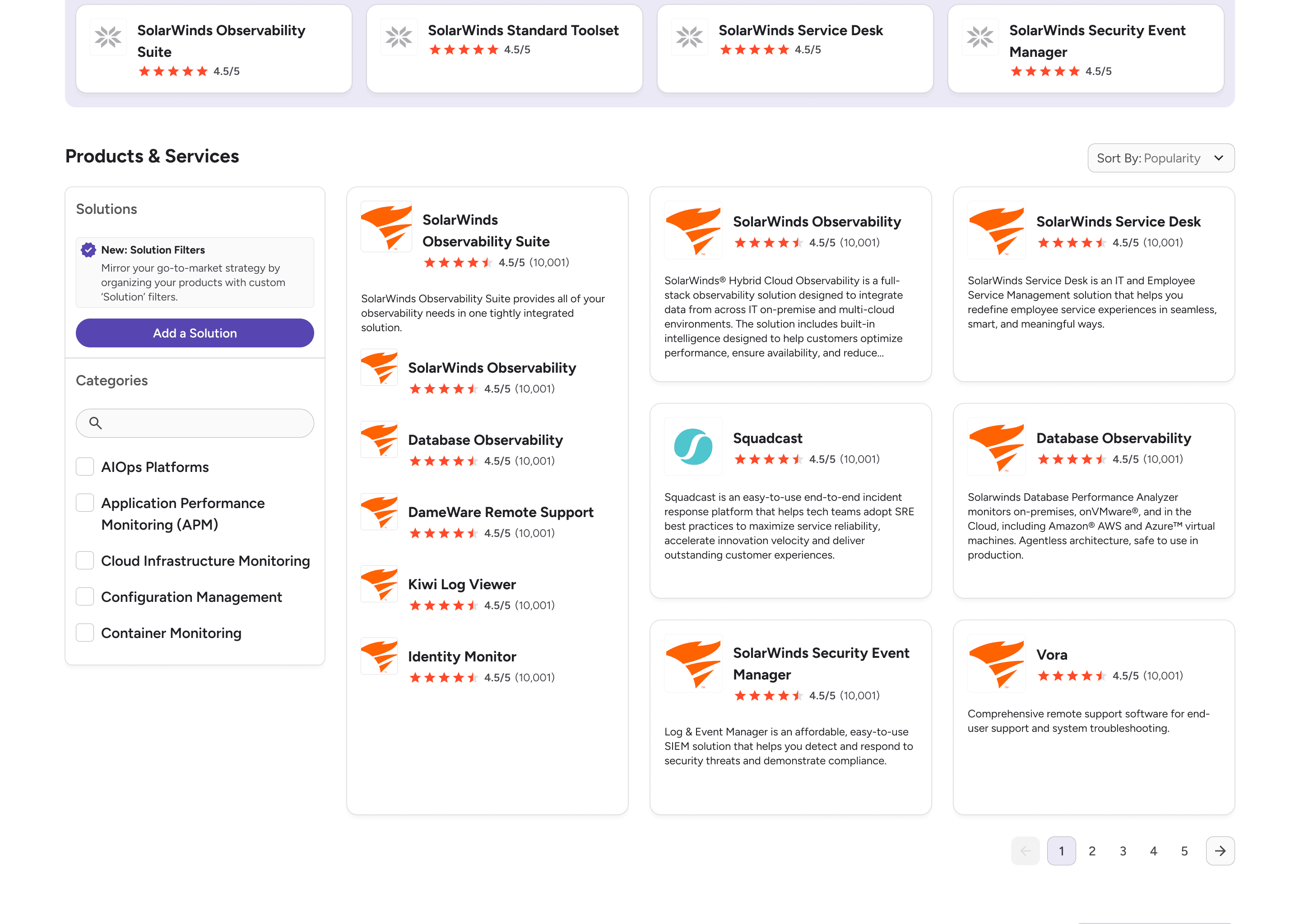
As pages became more content-rich, we explored filtering and organizational patterns that helped buyers quickly find the information most relevant to their needs.

Each of these initiatives delivered standalone value while helping validate the broader vision that would eventually become Seller Solutions.
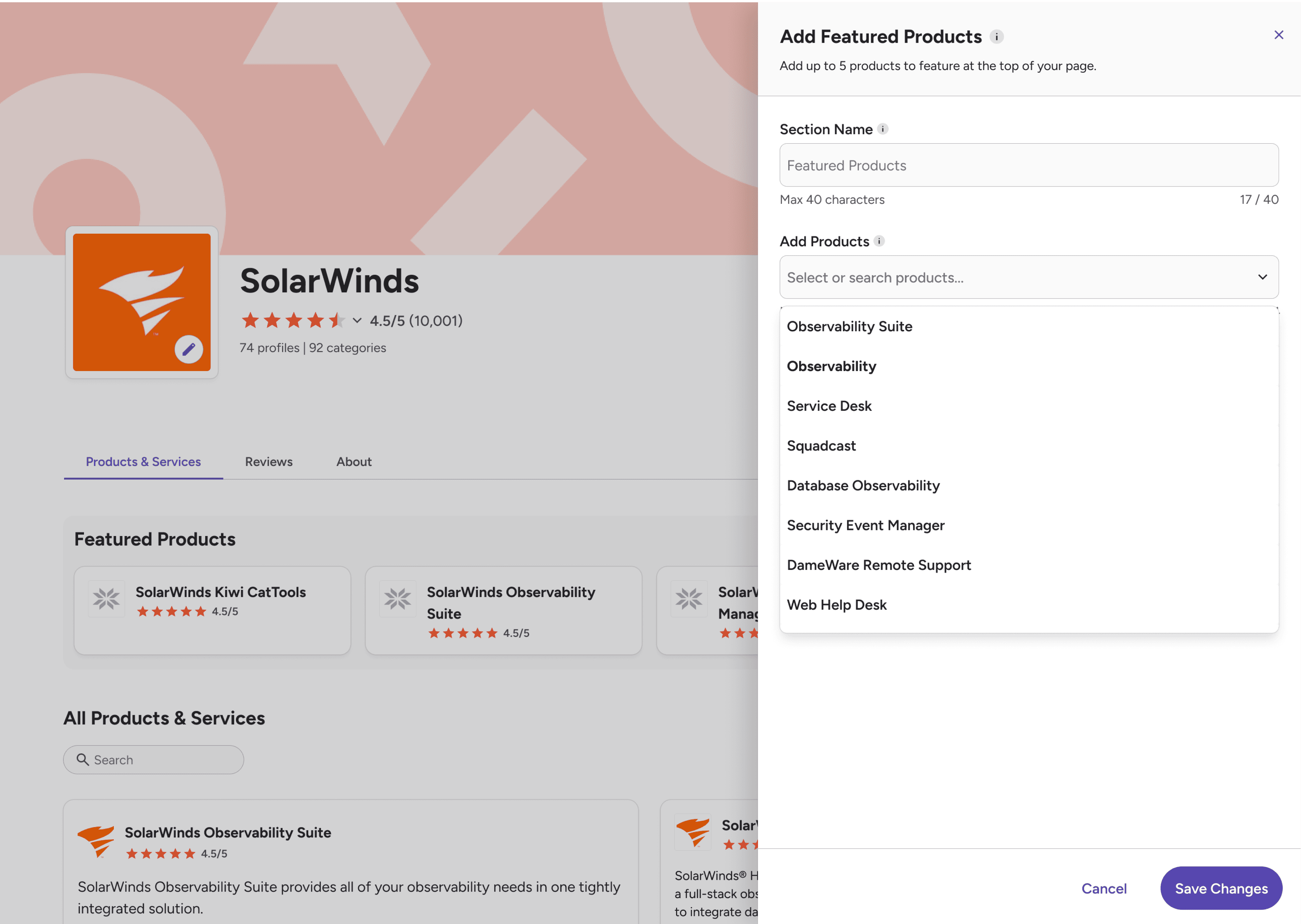
Customers wanted more control over which products received the most visibility. We tested this need with a dedicated Featured Products section before making larger changes to the product grid.

The first version of Solutions was intentionally simple: a specialized filter layered onto the existing product grid. This allowed us to validate customer demand before investing in a more comprehensive solution.

These initiatives allowed us to incrementally test in-context editing patterns, building confidence in an interaction model that was entirely new to G2.

The first iteration solved the organizational challenge, but not the narrative one. Customers could group products together, yet had no way to communicate why those products belonged together.

Solution Pages

Solution Pages

Solution Pages

Initial Launch Design

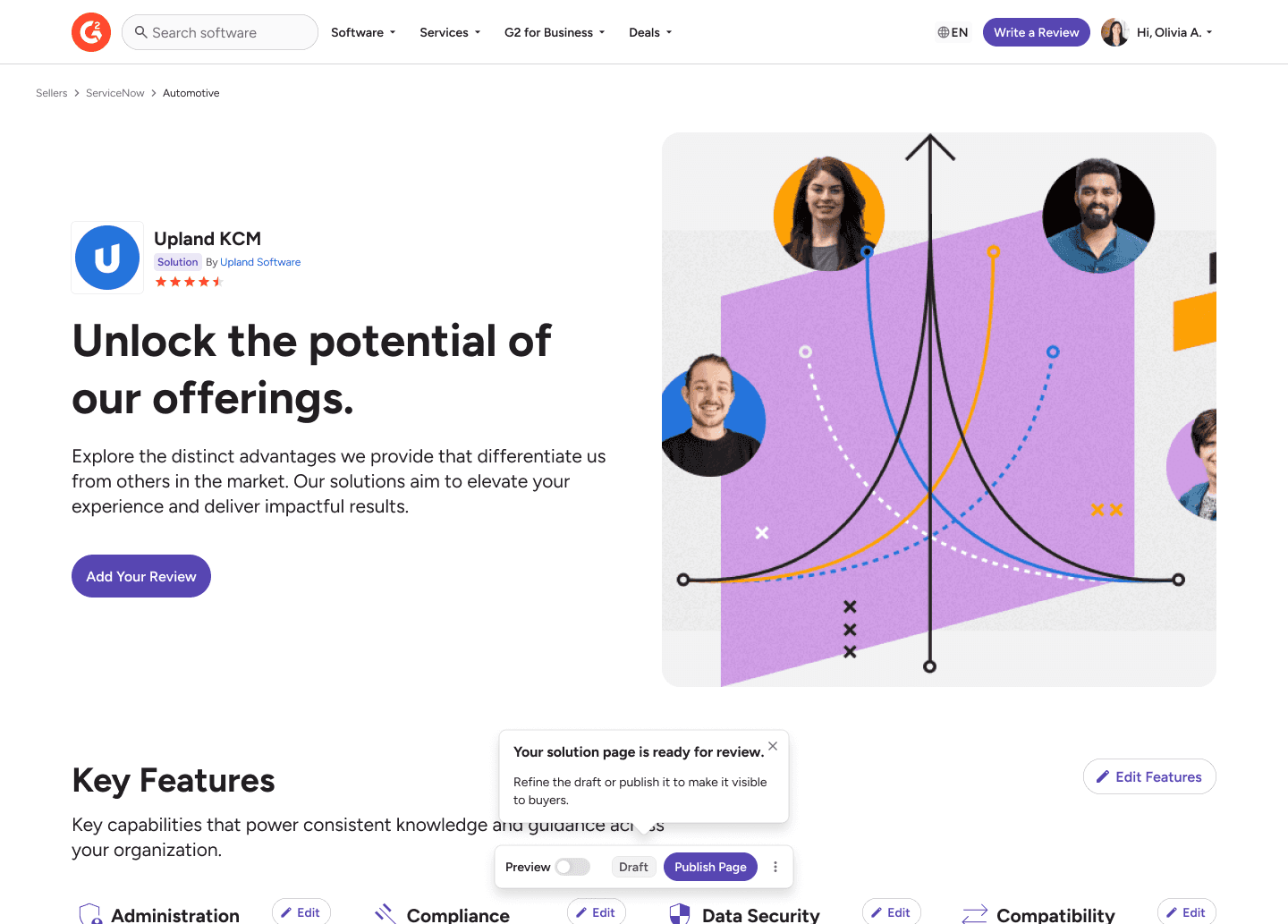
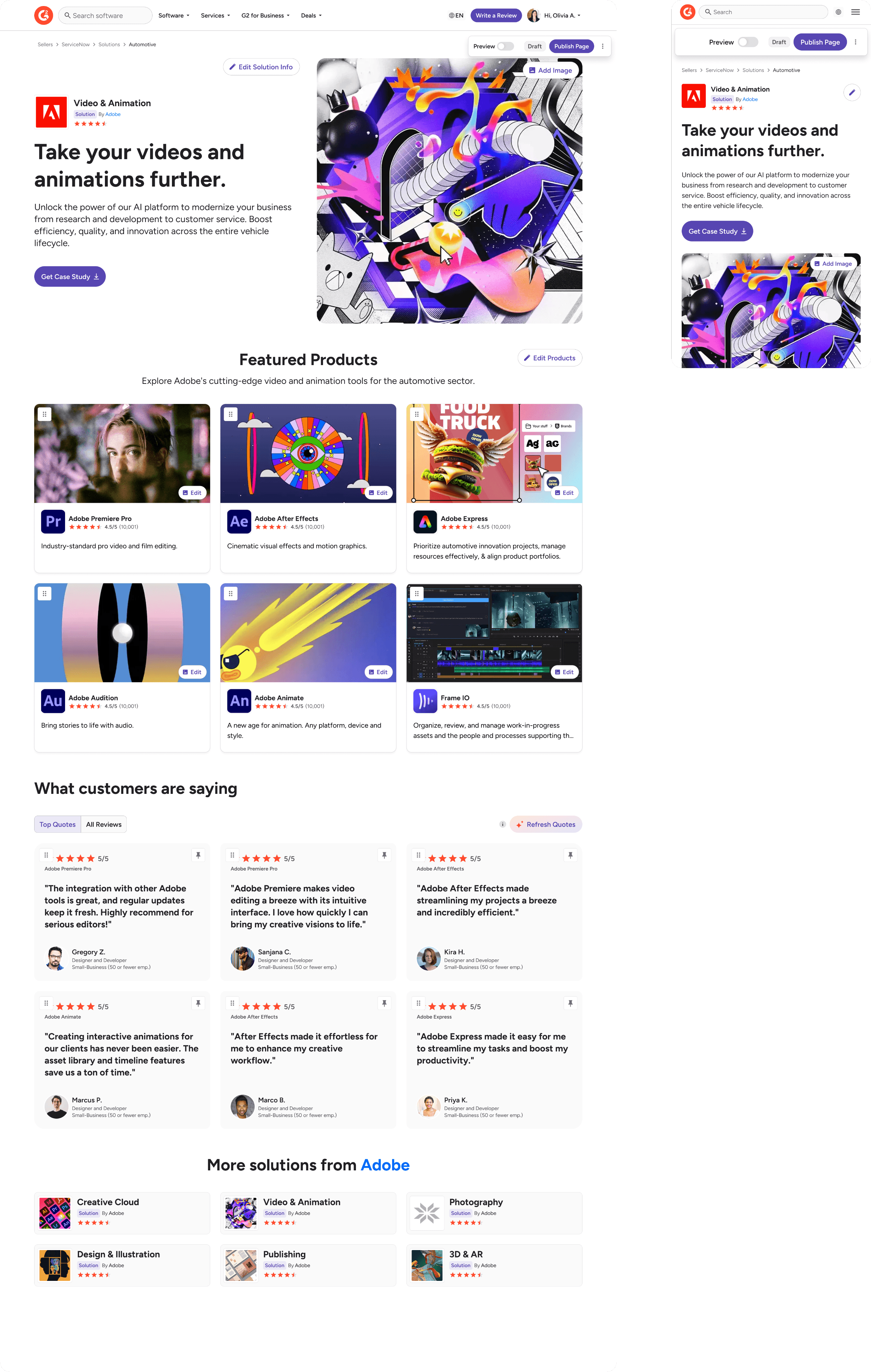
After several rounds of experimentation and validation, we launched the first version of Solution Pages. While intentionally limited in scope, this MVP established the core value proposition: helping sellers present groups of products as complete solutions rather than individual offerings.

The initial release combined several of the concepts we had been testing independently, including product curation, storytelling, social proof, and on-page editing. Together, these features created a more flexible and engaging way for customers to showcase their offerings while providing a foundation for future expansion.

Key capabilities included:

  • Published State Widget – Visibility into page status and publishing controls.

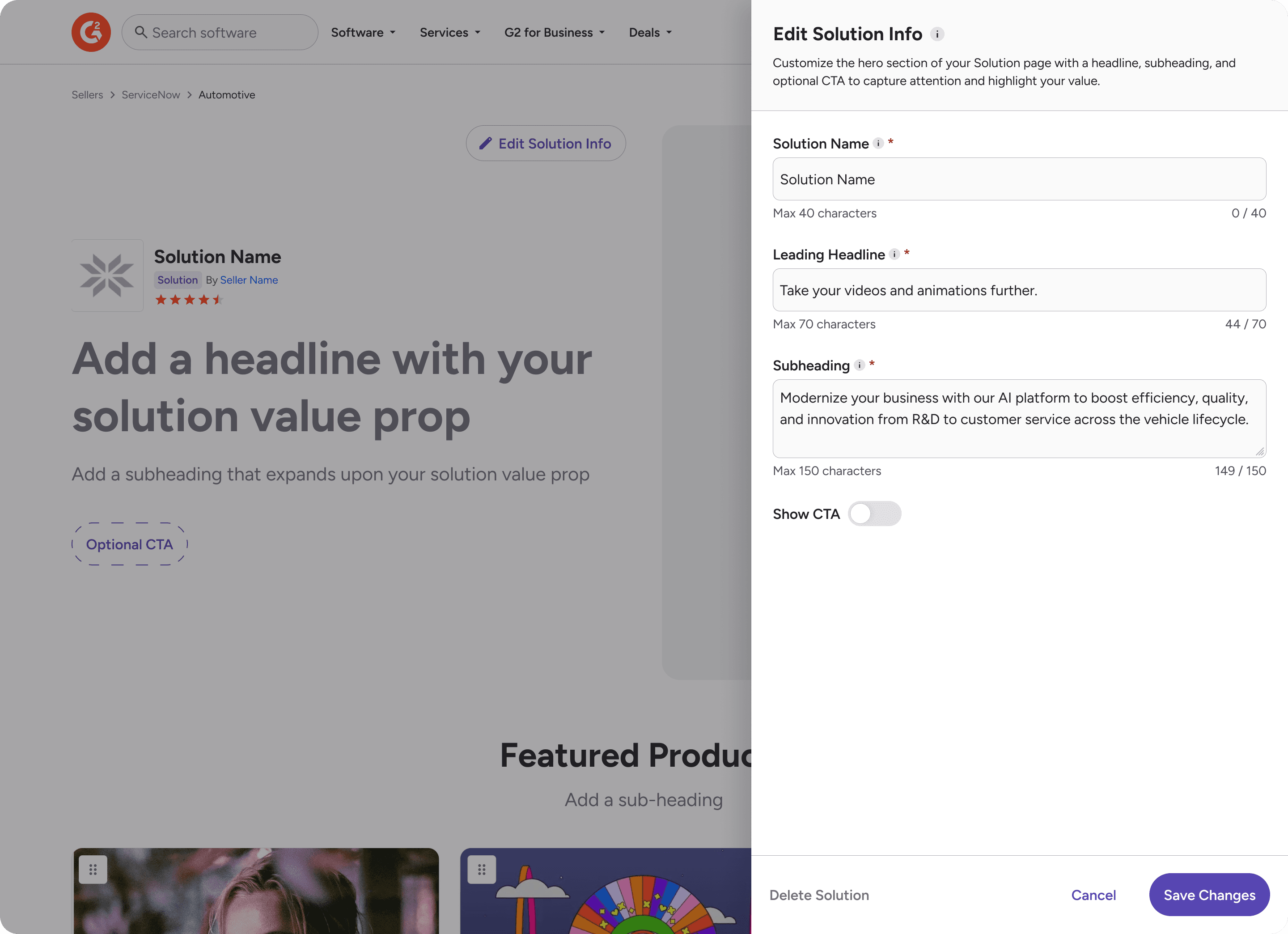
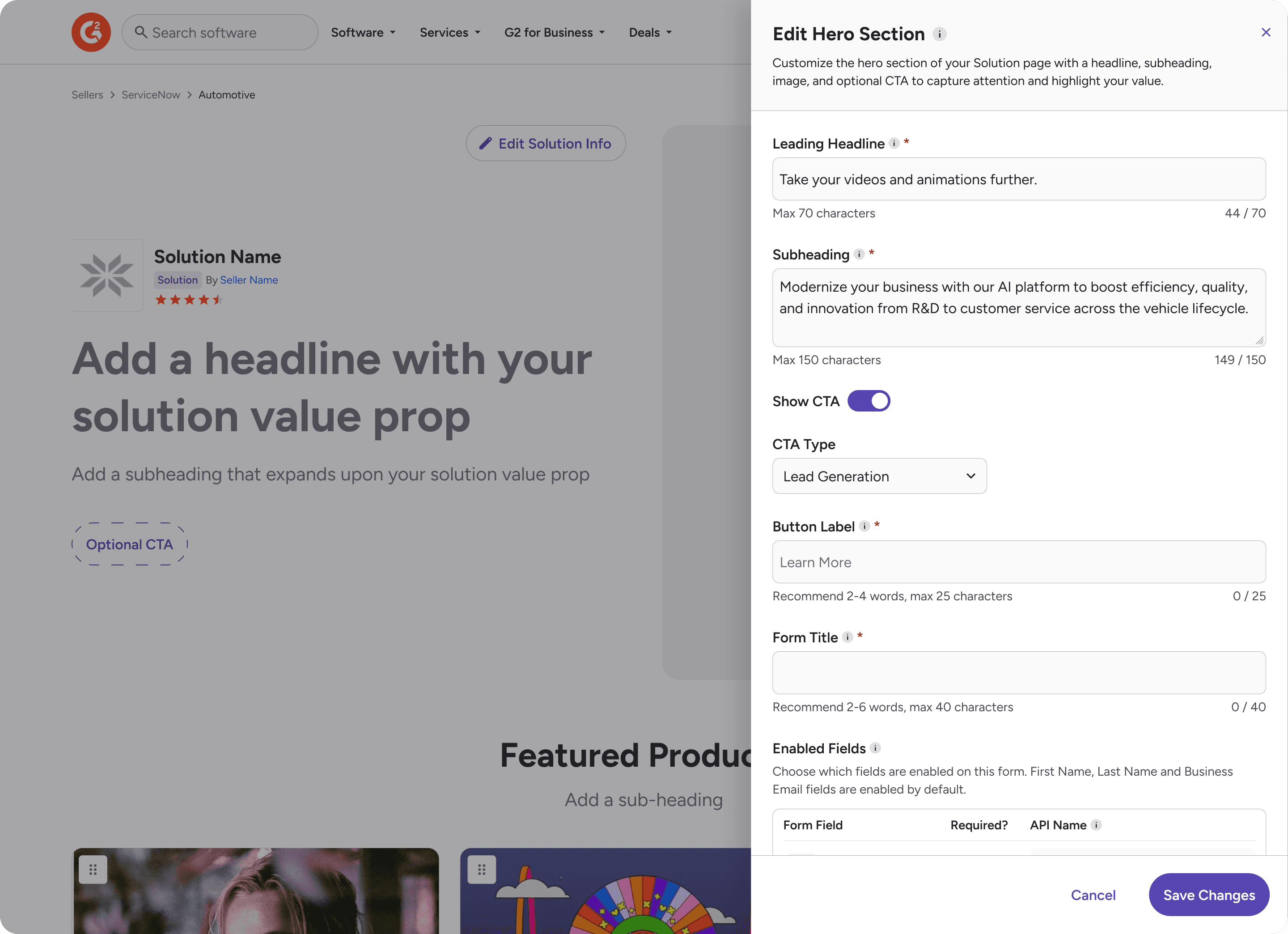
    Value Proposition Hero – A customizable hero area for communicating the solution's purpose and value.

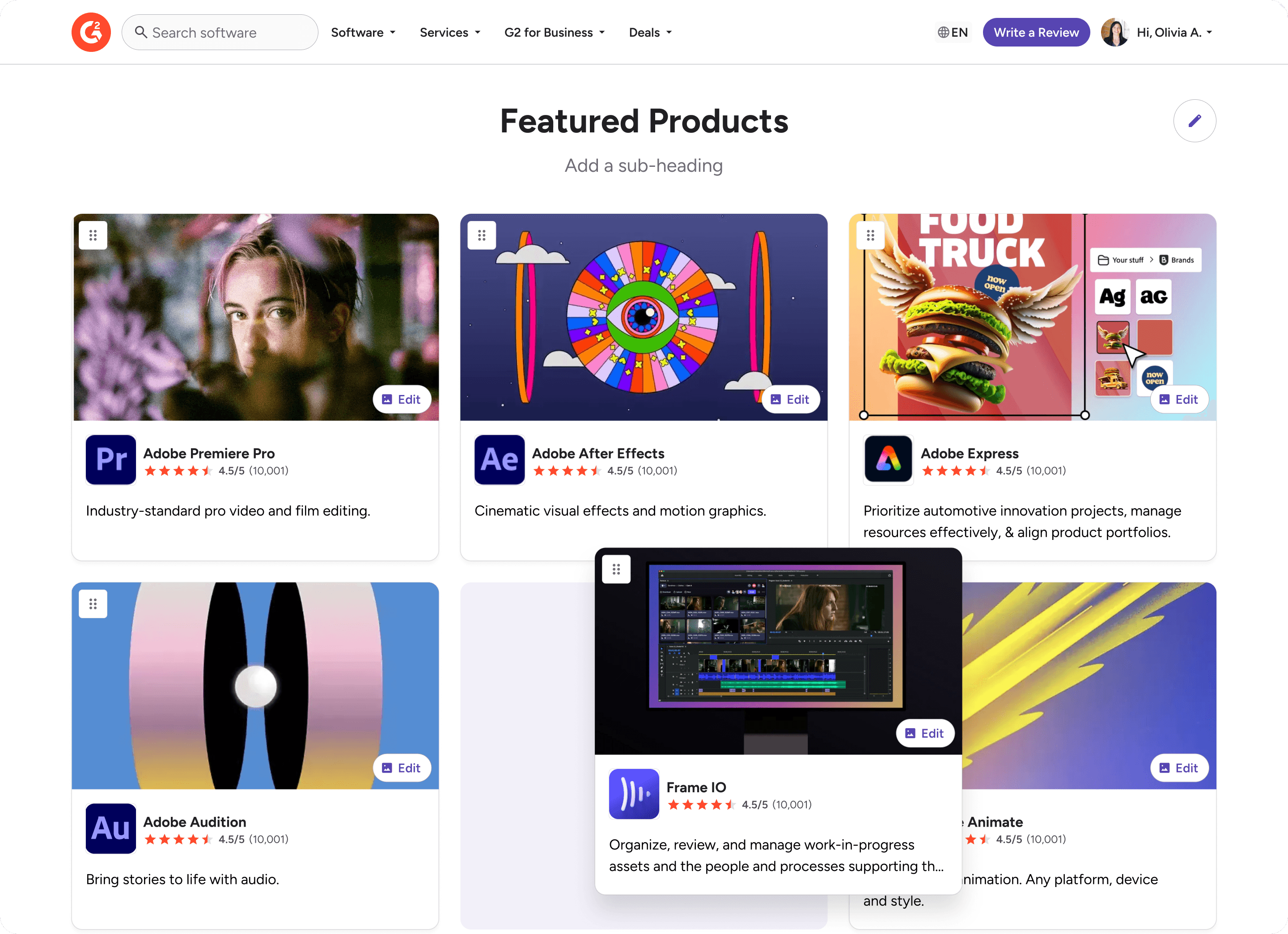
  • Customizable Product Grid – Curated collections of products organized around a specific use case or buyer need.

  • Enhanced Product Cards – Richer product presentation with improved hierarchy and supporting information.

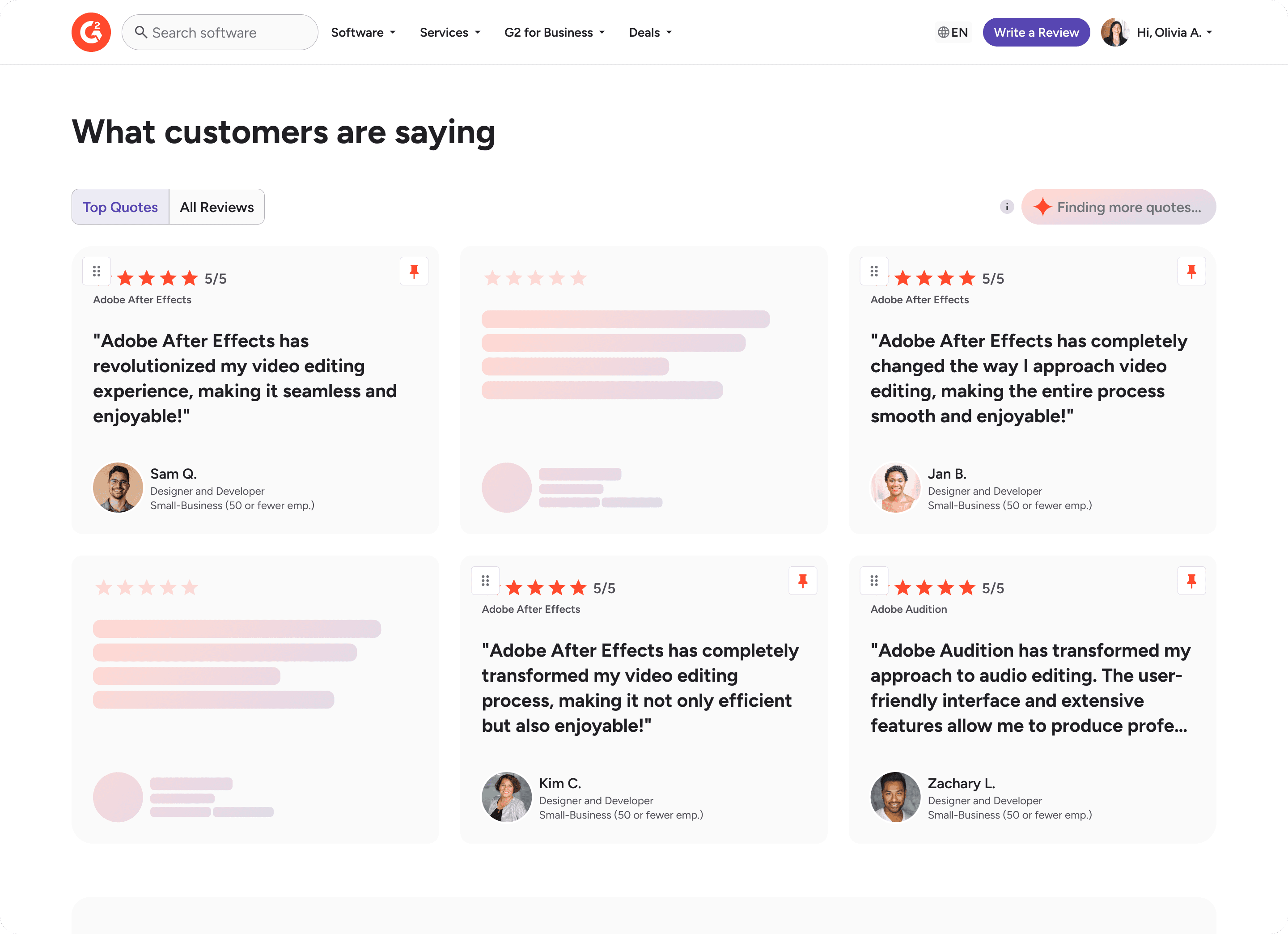
  • AI-Curated Customer Quotes – Automatically surfaced review content aligned to the solution narrative.

  • On-Page Editing Throughout – Direct, in-context editing that allowed customers to manage content without leaving the page.
System Design + Flexibility

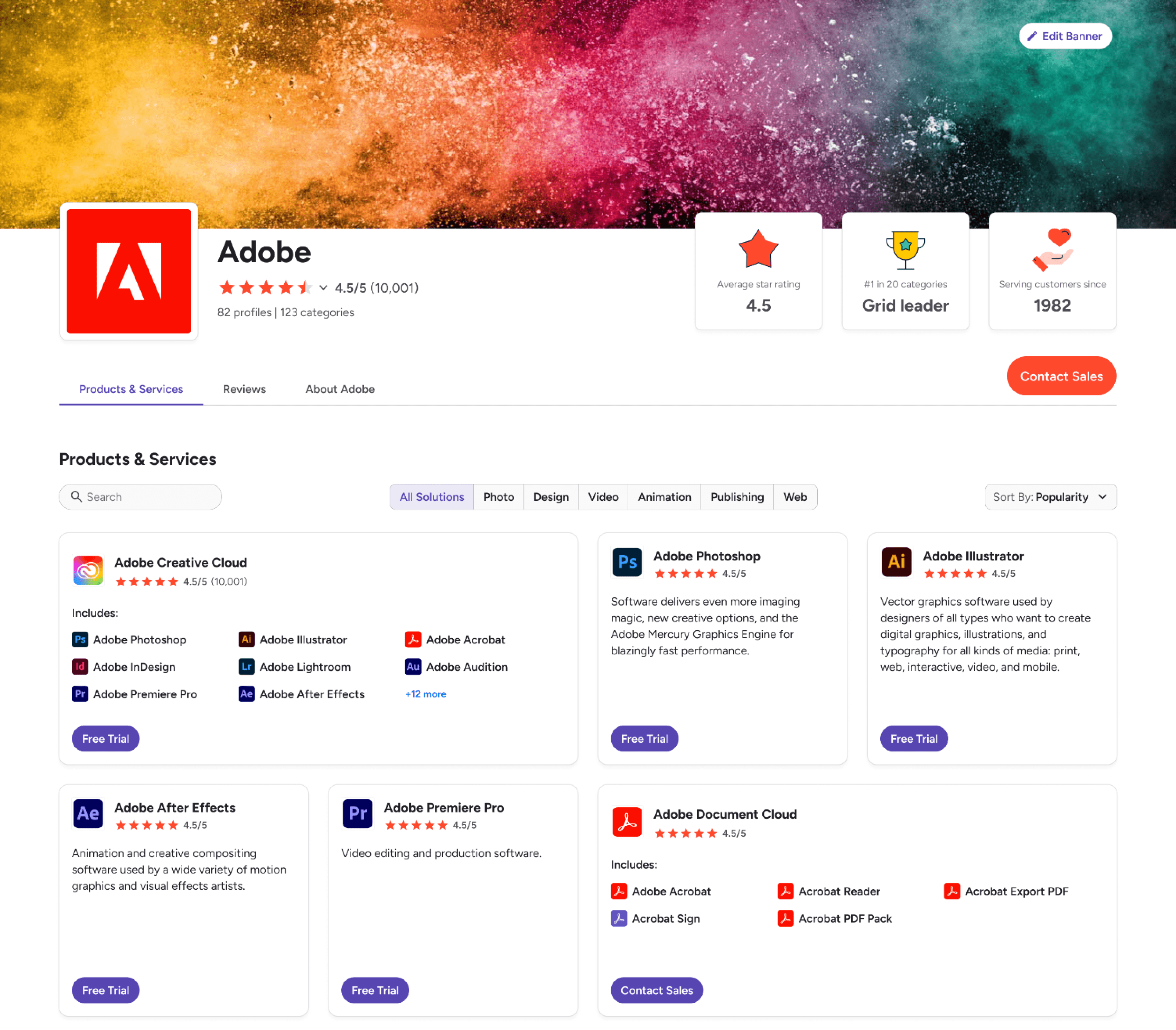
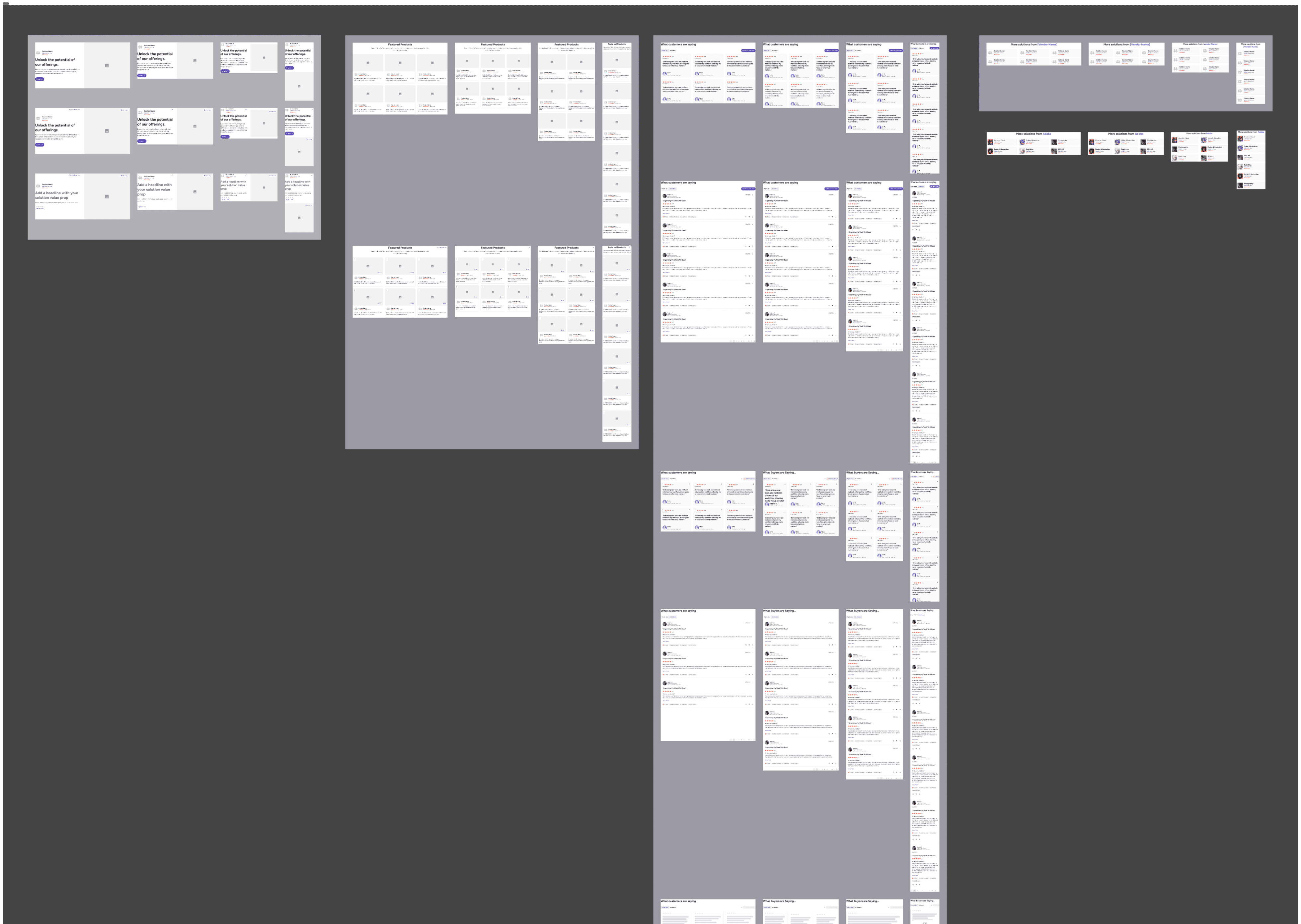
Solution Pages needed to support highly customized content while still feeling like a trusted part of the G2 ecosystem. Rather than creating bespoke experiences for every customer, we developed a flexible template system that could adapt to different brands, messaging, and product portfolios while maintaining consistency, accessibility, and buyer trust.

The system evolved alongside the product itself. As new customer needs emerged, we expanded the library of content blocks, editing patterns, and layout rules, gradually creating a scalable framework that balanced flexibility with governance. The result was a platform that allowed sellers to tell distinct stories without sacrificing the credibility and consistency that buyers expect from G2.

System Design + Flexibility

Solution Pages needed to support highly customized content while still feeling like a trusted part of the G2 ecosystem. Rather than creating bespoke experiences for every customer, we developed a flexible template system that could adapt to different brands, messaging, and product portfolios while maintaining consistency, accessibility, and buyer trust.

The system evolved alongside the product itself. As new customer needs emerged, we expanded the library of content blocks, editing patterns, and layout rules, gradually creating a scalable framework that balanced flexibility with governance. The result was a platform that allowed sellers to tell distinct stories without sacrificing the credibility and consistency that buyers expect from G2.

System Design + Flexibility

Solution Pages needed to support highly customized content while still feeling like a trusted part of the G2 ecosystem. Rather than creating bespoke experiences for every customer, we developed a flexible template system that could adapt to different brands, messaging, and product portfolios while maintaining consistency, accessibility, and buyer trust.

The system evolved alongside the product itself. As new customer needs emerged, we expanded the library of content blocks, editing patterns, and layout rules, gradually creating a scalable framework that balanced flexibility with governance. The result was a platform that allowed sellers to tell distinct stories without sacrificing the credibility and consistency that buyers expect from G2.

ehind every Solution Page was a scalable content system designed to support flexibility, governance, accessibility, and future growth.

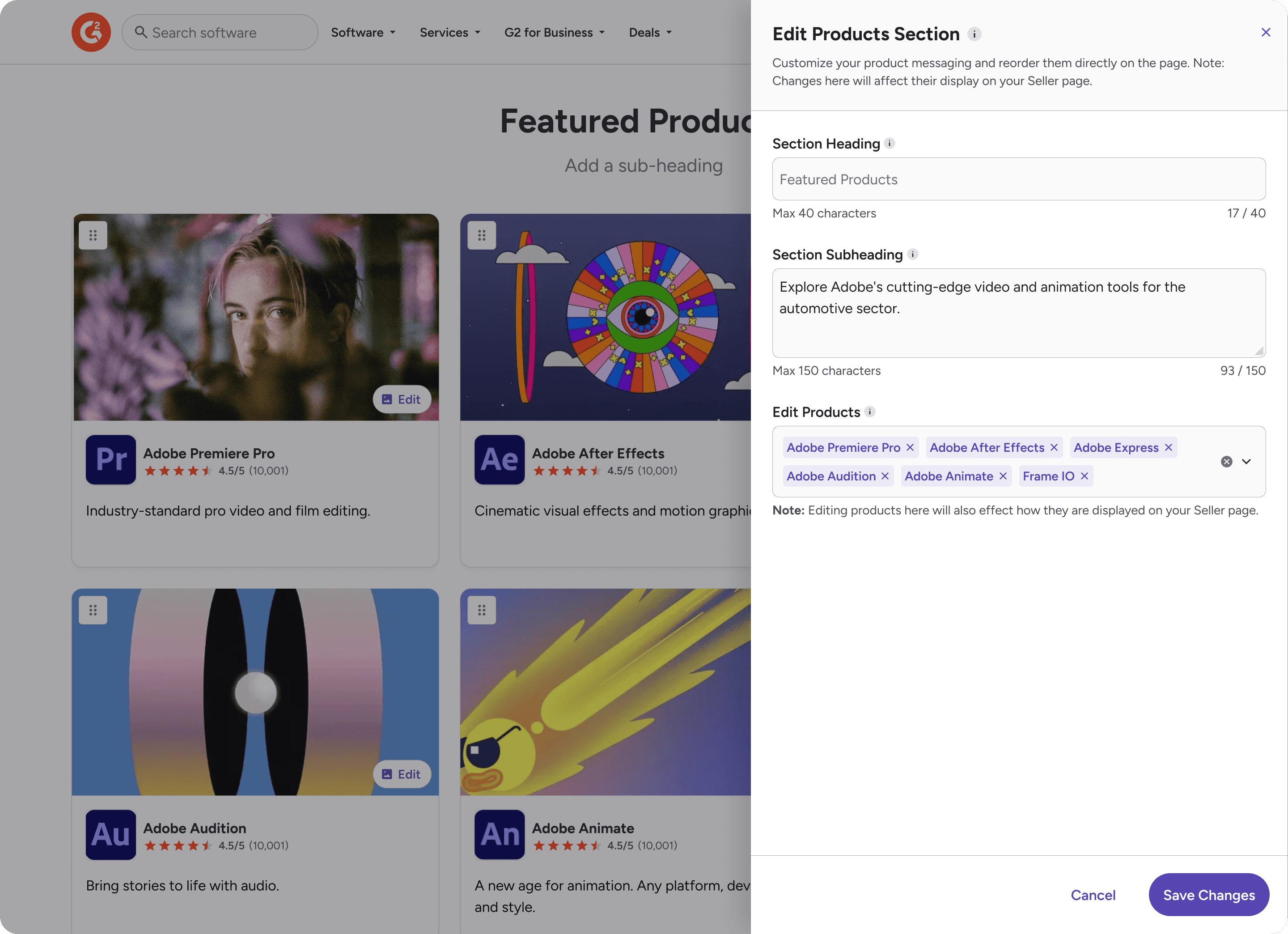
Early versions relied on a side-panel editor while we explored the full range of content types, controls, and authoring workflows customers would need.

Custom CTAs needed to integrate seamlessly with G2's existing lead generation infrastructure, supporting everything from external links to configurable lead capture forms.

Giving customers direct control over product selection and ordering was table stakes for the experience, but represented a significant shift from G2's traditionally managed content model.

Product reordering became one of the first Solution Pages capabilities to evolve into a shared design system component, accelerating future development.

One of G2's earliest AI-powered features helped sellers discover and curate relevant customer quotes from thousands of reviews. The interaction patterns developed here became a foundation for later AI-assisted content experiences throughout the product.

Fast Follows

Fast Follows

Fast Follows

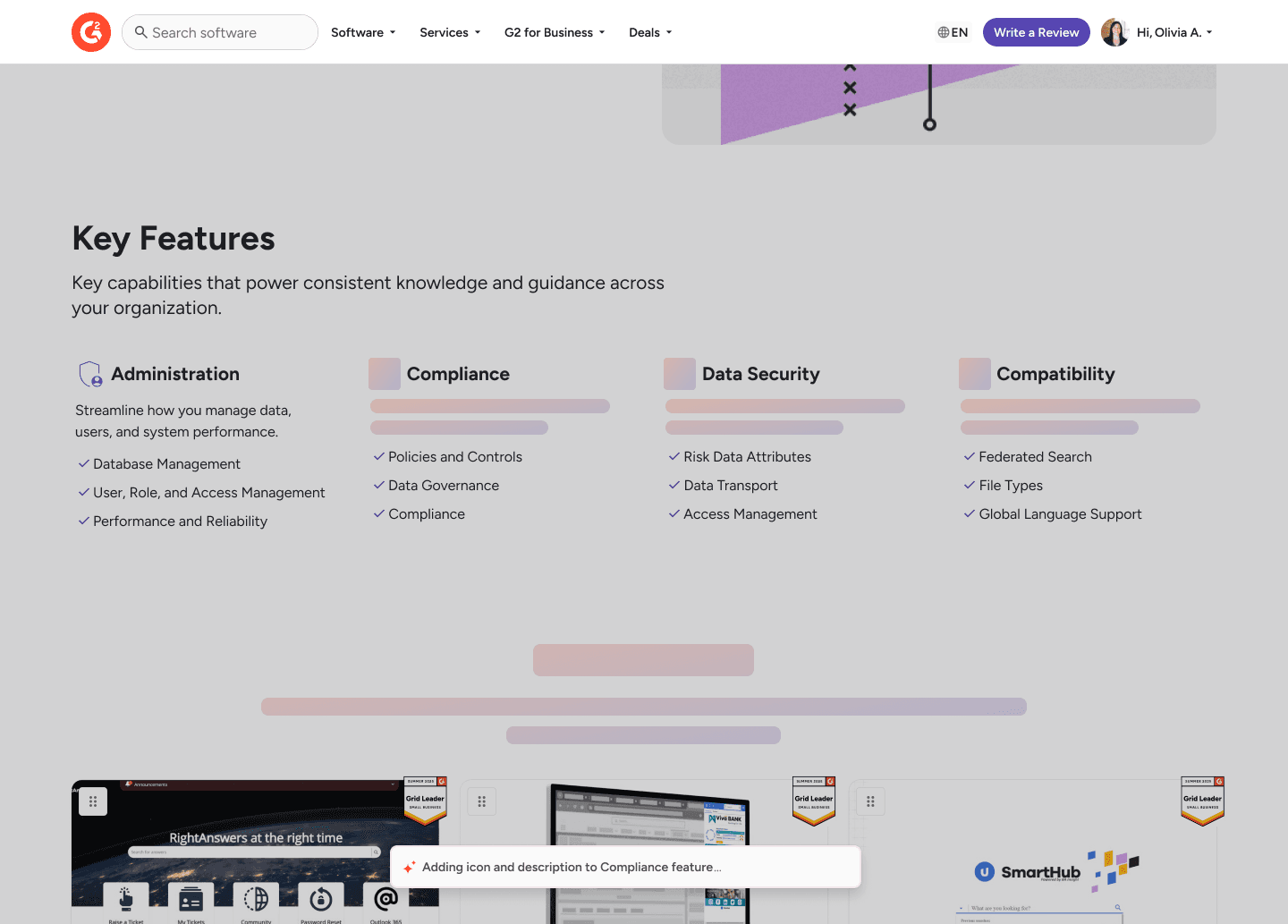
Features Block

From Product Collections to Product Storytelling

As Solution Pages gained adoption, we noticed a recurring pattern: customers were creating multiple pages containing the same products but targeting different buyer personas, industries, or use cases. The products themselves weren't changing, only the story surrounding them.

To address this, we introduced a dedicated Features Block that allowed customers to highlight specific capabilities, benefits, and differentiators without duplicating entire solutions. This gave sellers a more flexible way to tailor their messaging while reducing content maintenance overhead.

The feature also introduced a customizable icon selector powered by a curated library of Google Material symbols, allowing customers to create visually consistent feature lists without requiring custom design assets.
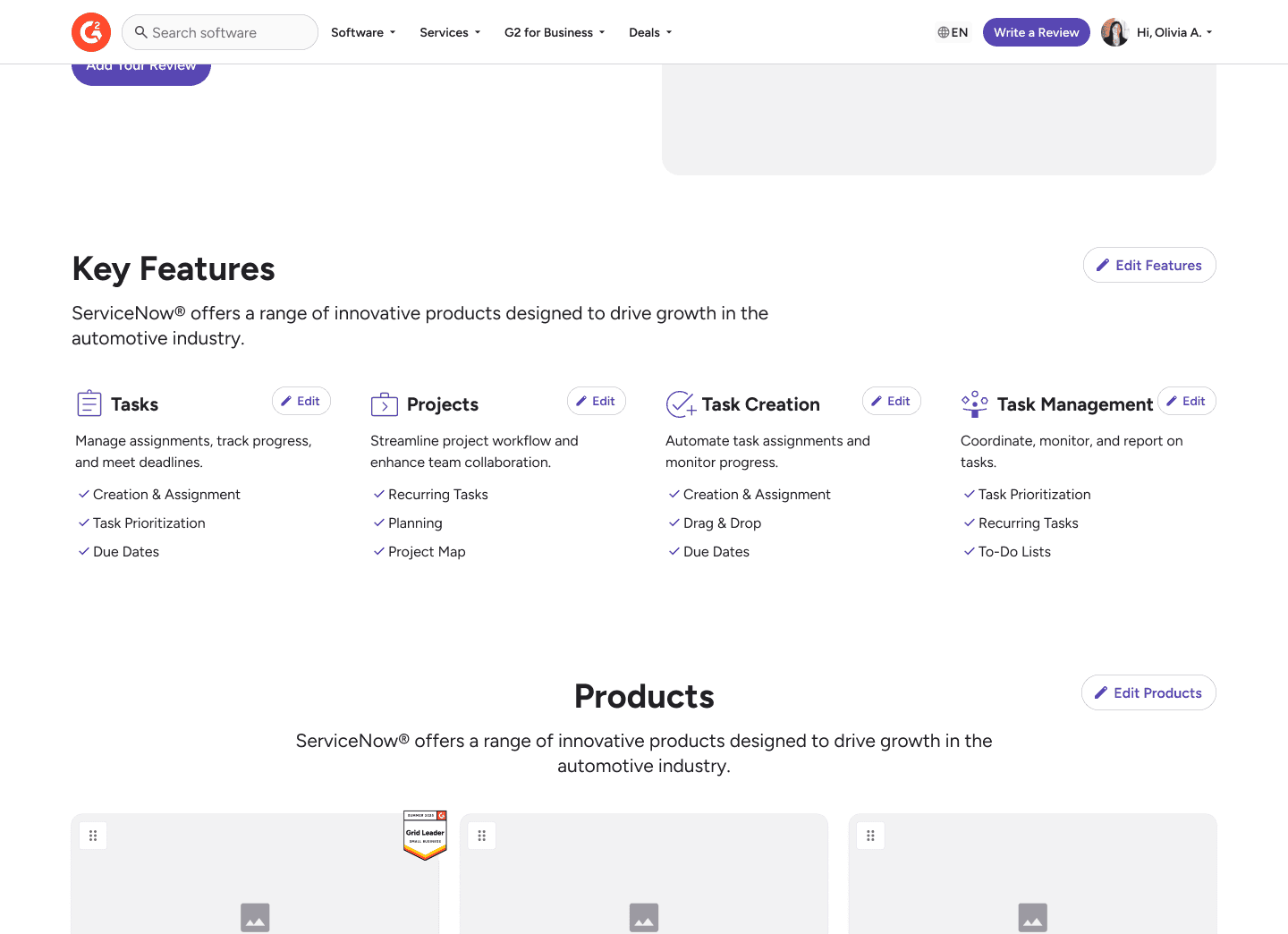
By surfacing top product capabilities directly within the editor, we made feature curation easier for sellers while reducing the complexity of G2's underlying feature hierarchy.
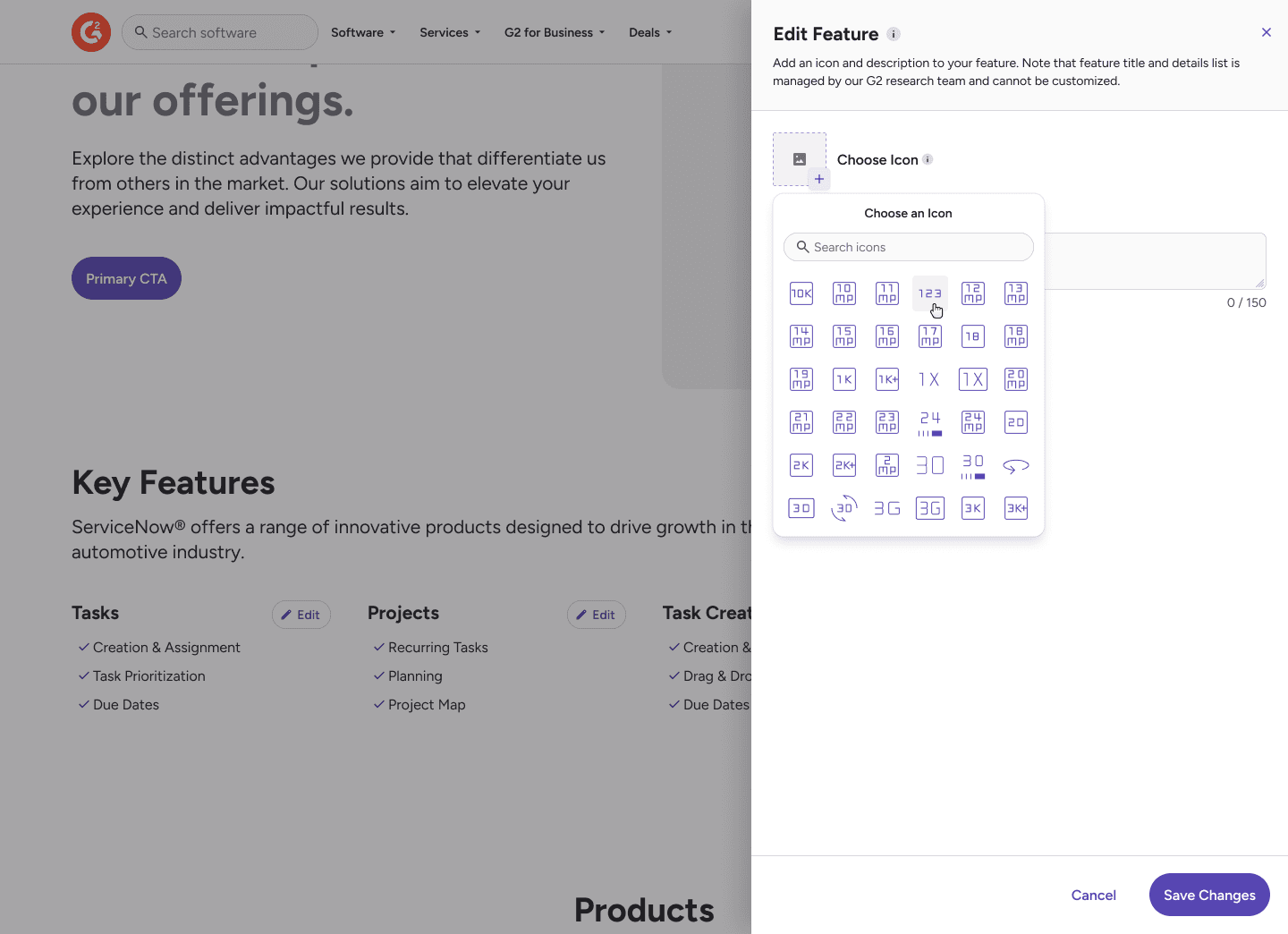
The icon selector introduced a more structured authoring pattern, replacing ad hoc image uploads with a curated library of reusable visual assets.
AI Generated Pages & Content

Section Title

From Product Collections to Product Storytelling

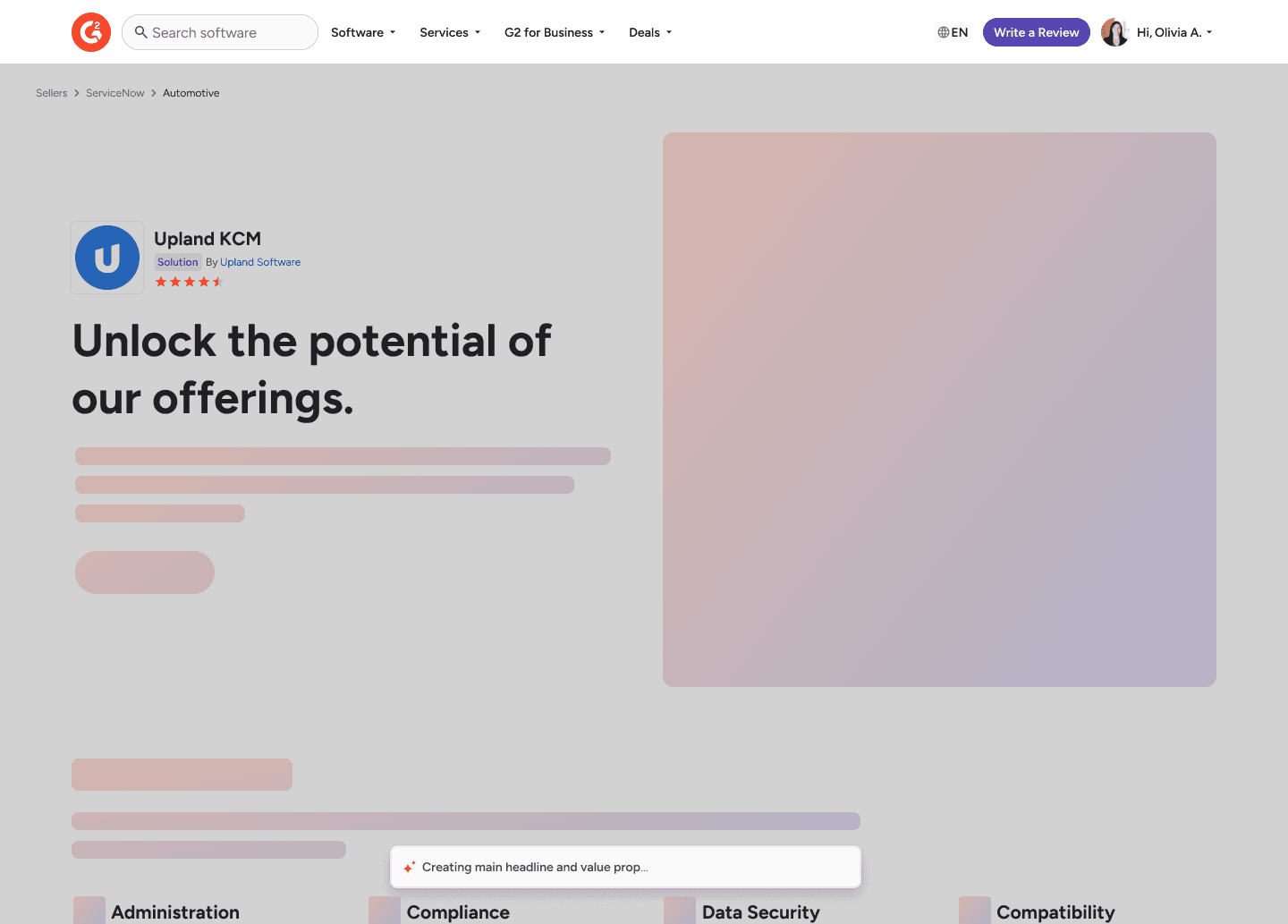
While adoption of Solution Pages was strong, we observed that many customers began creating pages but never completed them. Draft pages often stalled because customers struggled to write headlines, descriptions, feature copy, and supporting content from scratch.

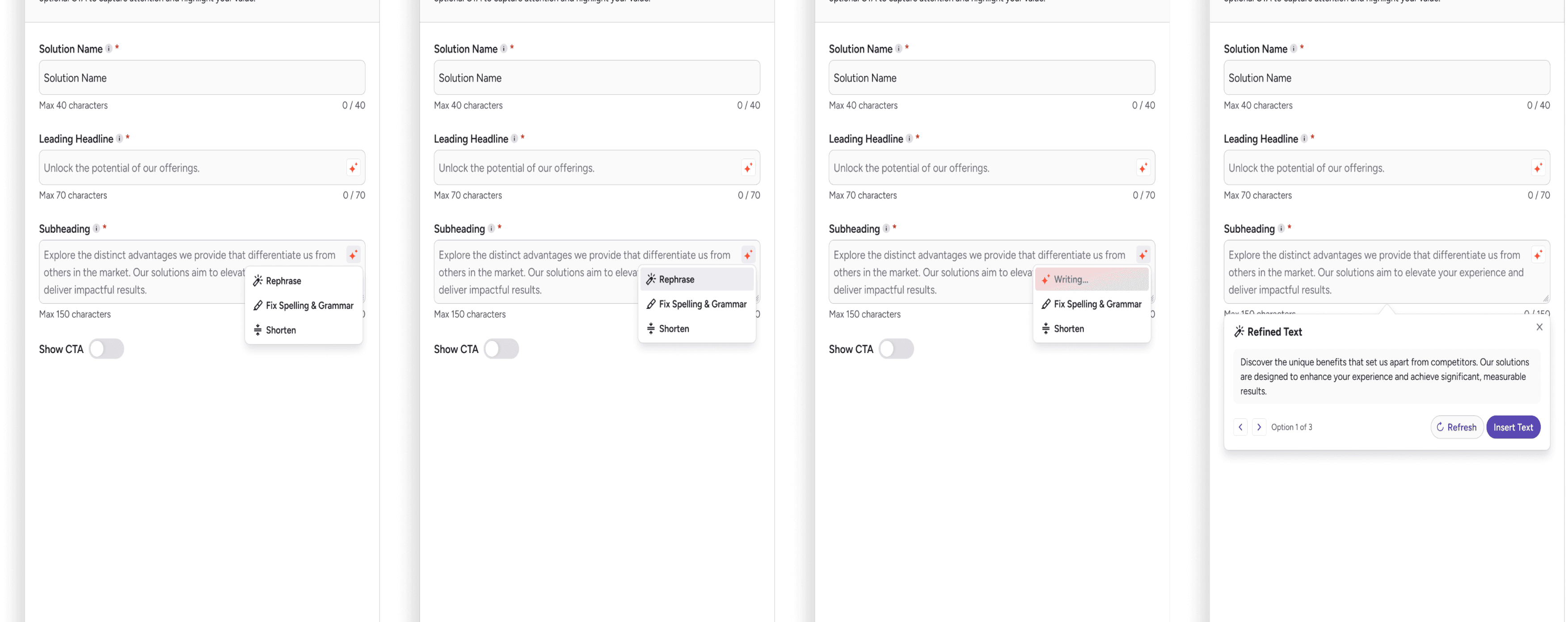
Rather than treating this as a content problem, we saw an opportunity to use AI to accelerate page creation. By combining a small number of customer inputs with existing G2 data sources—including product information, review content, and company metadata—we could generate a complete first draft of an entire Solution Page.

The goal wasn't to replace human input. It was to eliminate the blank page and provide customers with a launch-ready starting point they could refine and personalize.

This work also led to the development of a set of inline AI authoring patterns that were later adopted across multiple G2 experiences. Features such as AI-assisted content generation, contextual suggestions, and iterative refinement workflows became foundational patterns for future AI initiatives throughout the product ecosystem.

Key outcomes:

  • Reduced friction during page creation

  • Increased likelihood of draft pages reaching publication

  • Established reusable AI authoring patterns

  • Influenced AI-assisted workflows across G2 products

We noticed a growing number of Solution Pages being started but never completed. To reduce the effort required to get to a publishable page, we explored AI-generated first drafts built from a small set of customer inputs and existing G2 data.

The goal wasn't to replace human authorship. It was to eliminate the blank page. By generating launch-ready content as a starting point, we helped customers move from draft to published faster.

This work also established several AI authoring patterns—including inline generation, contextual suggestions, and iterative refinement—that were later adopted across G2.

Key outcomes:

  • Reduced friction during page creation

  • Increased likelihood of draft pages reaching publication

  • Established reusable AI authoring patterns

  • Influenced AI-assisted workflows across G2 products

G2 Solutions wins

3m
Attributed Revenue

3 times our original goal

3m
Attributed Revenue

3 times our original goal

3m
Attributed Revenue

3 times our original goal

200+
Solution Pages Created

And growing. AI creation tools are expected to accelerate this

200+
Solution Pages Created

And growing. AI creation tools are expected to accelerate this

200+
Solution Pages Created

And growing. AI creation tools are expected to accelerate this

30%
Increase Buyer Engagement

For Sellers who create Solutions

30%
Increase Buyer Engagement

For Sellers who create Solutions

30%
Increase Buyer Engagement

For Sellers who create Solutions

New Product Offering

The cornerstone of our new Enterprise package

New Product Offering

The cornerstone of our new Enterprise package

New Product Offering

The cornerstone of our new Enterprise package

Proven New Patterns

We showed that on-page editing and AI-assisted content is the future of the Seller Experience

Proven New Patterns

We showed that on-page editing and AI-assisted content is the future of the Seller Experience

Proven New Patterns

We showed that on-page editing and AI-assisted content is the future of the Seller Experience

Goals Set, Goals Achieved

We proved-out new WOW for squad success

Goals Set, Goals Achieved

We proved-out new WOW for squad success

Goals Set, Goals Achieved

We proved-out new WOW for squad success

Larry Reynolds | Digital Product Design

© 2026

Larry Reynolds | Digital Product Design

© 2026

Larry Reynolds | Digital Product Design

© 2026